SCOTUStoday for Tuesday, December 9

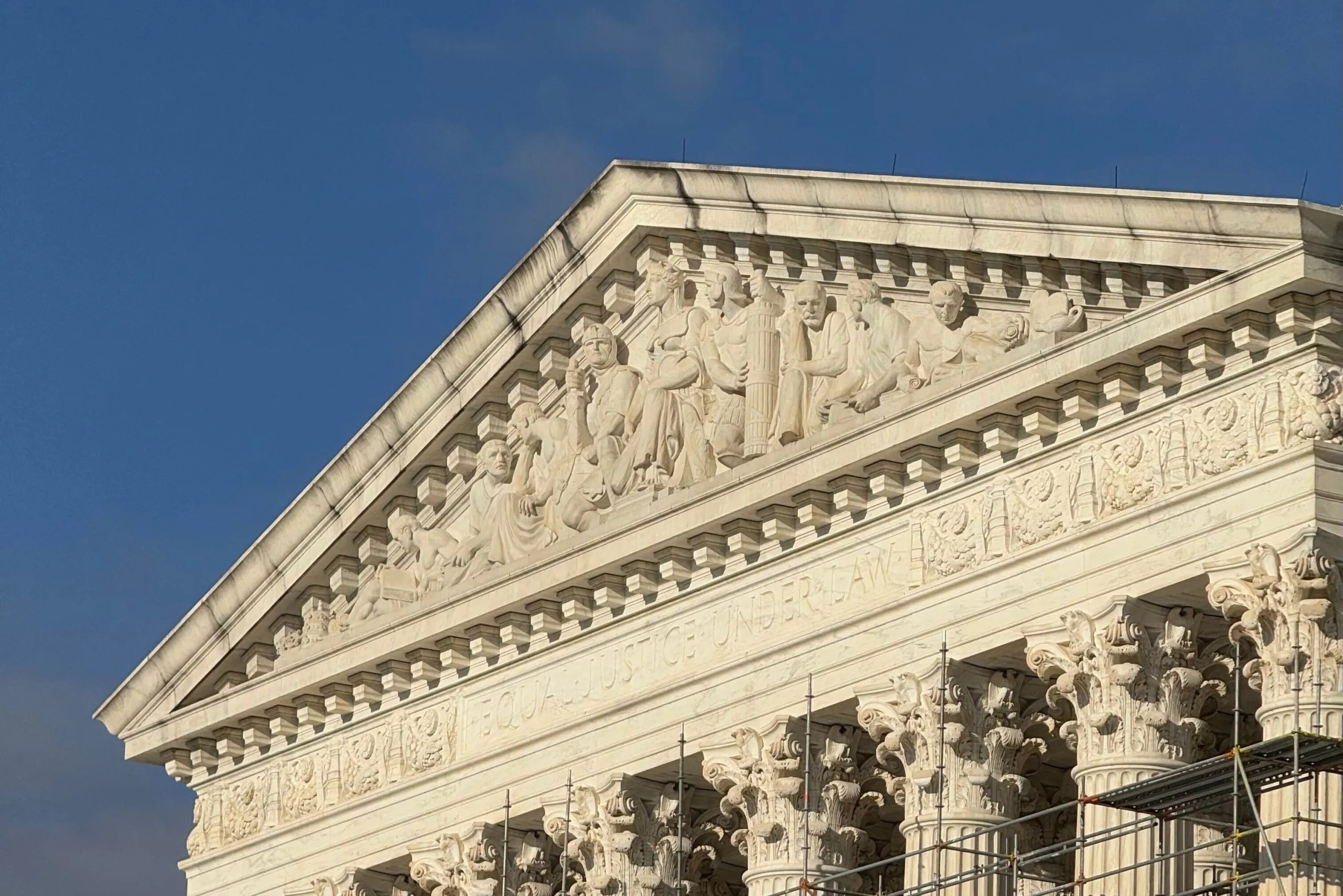
Today marks 25 years since the Supreme Court halted the recount in Florida to hear arguments in the dispute between then-candidate George W. Bush and his opponent in the 2000 presidential election, then-Vice President Al Gore, over the process for the recount. The court heard arguments two days later and released its unsigned opinion in favor of Bush one day after that.
SCOTUS Quick Hits
- On Monday, the court released an order list announcing several denied petitions, as well as a summary reversal in Doe v. Dynamic Physical Therapy, LLC, a case on whether a state procedural law immunizing health care providers from liability during a public health emergency overrides a federal cause of action.
- Also on Monday, the justices heard argument in Trump v. Slaughter, on the president’s authority to fire the heads of independent, multi-member federal agencies. For key takeaways, check out Amy Howe’s argument analysis, the SCOTUSblog live blog, and Advisory Opinions’ live broadcast.
- Today, the justices will hear argument in National Republican Senatorial Committee v. Federal Election Commission, on whether to further cut back campaign finance limitations. Amy’s case preview is available here.
- Tomorrow, the justices will hear argument in Hamm v. Smith, on how and whether courts should consider the cumulative effect of multiple IQ scores when applying the court’s ban on executing people who are intellectually disabled, and FS Credit Opportunities Corp. v. Saba Capital Master Fund, Ltd., on whether the federal courts should recognize a federal statute as implying a private right of action (that is, providing the ability for private parties to sue) when the words of the statute do not explicitly authorize it.
- The court could issue its decision in the interim docket case on President Donald Trump’s effort to deploy the National Guard to Illinois at any time.
Morning Reads
- US Supreme Court turns away appeal of Texas library book ban (Jan Wolfe, Reuters) — Among the many petitions denied by the Supreme Court on Monday was “an appeal by a group of residents of a rural Texas county of a judicial decision allowing local officials to remove 17 books that these officials deemed objectionable from public libraries,” according to Reuters. “The justices let stand a lower court’s decision allowing the removal of books including ones dealing with themes of race and LGBT identity, from its public library system. The lower court rejected the argument made by the plaintiffs that removing the books was unlawful under the U.S. Constitution’s First Amendment protections against government abridgment of free speech.”
- Supreme Court rejects free speech case over controversial vanity plate (Maureen Groppe, USA Today) — Monday’s order list also revealed that the court won’t “get involved in states’ regulation of vanity license plates,” according to USA Today. The justices turned down “an appeal from a Tennessee woman challenging the rejection of her controversial ’69PWNDU’ personalized plate,” who had asked the court to take up her case and “find that she is expressing her own views through a vanity plate, not the government’s, a decision that would have limited states’ ability to control that message.”
- What a Supreme Court decision about a Texas map means for redistricting in Indiana (Marissa Meador, Indianapolis Star)(Paywall) — The Supreme Court’s Dec. 4 decision to allow Texas to use its new congressional map in the 2026 elections “could hamper a potential legal challenge to Indiana’s mid-decade redistricting efforts,” according to the Indianapolis Star. Like Texas’ map, Indiana’s proposed map has faced pushback for potentially diluting the voting power of nonwhite voters, but Indiana Republicans, like Texas Republicans before them, insist that it serves political, rather than racial, goals. “As the United States Supreme Court emphasized once again last night, redistricting for political reasons is constitutional,” Indiana Attorney General Todd Rokita said in a press release on Dec. 5.
- After Deadlocked Supreme Court Case, More States Jump on Religious Charter School Bandwagon (Linda Jacobson, The 74) — The court soon may be asked to reconsider “whether charter schools can be religious,” as efforts are underway in Tennessee and Oklahoma to get such schools approved by education officials, according to The 74. “In Tennessee, the nonprofit Wilberforce Academy is suing the Knox County Schools in federal court because the district refuses to allow a Christian charter school. … The legal challenge in Tennessee comes as a Florida-based charter school network prepares to submit an application to the Oklahoma Charter School Board for a Jewish virtual charter high school.” In May, the Supreme Court split 4-4 over a different religious charter school in Oklahoma, leaving a ruling by the Oklahoma Supreme Court rejecting the Catholic school in place. The deadlock was possible because Justice Amy Coney Barrett had recused herself.
- Must the Military Disobey Unlawful Orders? Pam Bondi Has Said Yes (Adam Liptak, The New York Times)(Paywall) — Before Pam Bondi was the U.S. attorney general, she was a lawyer for the America First Policy Institute. As part of her work for that conservative think tank, she filed a friend-of-the-court brief in the Supreme Court last year in the presidential immunity case and noted that such immunity is not as big of a problem as it may seem in the military context because members of the military must refuse unlawful orders, according to The New York Times. That brief became more significant recently when President Donald Trump criticized Democratic lawmakers who “issued a video … telling members of the military that they must refuse unlawful orders” and as his administration faces pushback over “strikes on boats said to be smuggling drugs.”
A Closer Look: Coverage of the Slaughter Argument
Yesterday’s argument in Trump v. Slaughter was covered by a great deal of outlets (including SCOTUSblog), which were watching to see whether the court seemed likely to grant President Donald Trump more control over independent, multi-member federal agencies. Here’s a sampling of the headlines used for articles summarizing the discussion, which give us a sense of how reporters think the Trump administration fared.
Associated Press: Supreme Court seems likely to back Trump’s power to fire independent agency board members
Reuters: Supreme Court conservatives poised to back Trump in FTC firing case
The Wall Street Journal: Supreme Court Appears Ready to Give President More Power to Fire Government Officials
The New York Times: Justices Seem Ready to Give Trump More Power to Fire Independent Government Officials
The Washington Post: Supreme Court poised to expand Trump’s power over independent agencies
CBS News: Supreme Court seems open to allowing Trump to fire some agency officials without cause
The Washington Times: Supreme Court poised to grant Trump broader firing powers over independent agencies
Politico: Supreme Court seems likely to let Trump fire independent agency heads
Fox News: SCOTUS poised to side with Trump on FTC firing — a showdown that could topple 90-year precedent
Vox: How the Supreme Court is using Trump to grab more power for itself
SCOTUS Quote
GENERAL SAUER: “I agree, with an important caveat that the Court said in Seila Law that the one, you know, sort of exception to all this division was the presidency itself, where the Framers consciously adopted a unified and energetic executive.”
JUSTICE KAGAN: “Well, that’s not a caveat.” (Laughter.)
GENERAL SAUER: “Or – or a codicil.”
JUSTICE KAGAN: “That’s actually – that’s like the not X to my X –”
On Site
Argument Analysis
Court Seems Likely to Side with Trump on President’s Power to Fire FTC Commissioner
The Supreme Court on Monday morning signaled that it was likely to strike down a federal law that restricts the president’s ability to fire members of the Federal Trade Commission. During two and a half hours of arguments in the case of Trump v. Slaughter, a solid majority of the justices appeared to agree with the Trump administration that a law prohibiting the president from firing FTC commissioners except in cases of “inefficiency, neglect of duty, or malfeasance in office” violates the constitutional separation of powers between the three branches of government. Read Amy’s argument analysis for more on Monday’s debate.
Posted in Featured, Newsletters