Five issues in front of the justices

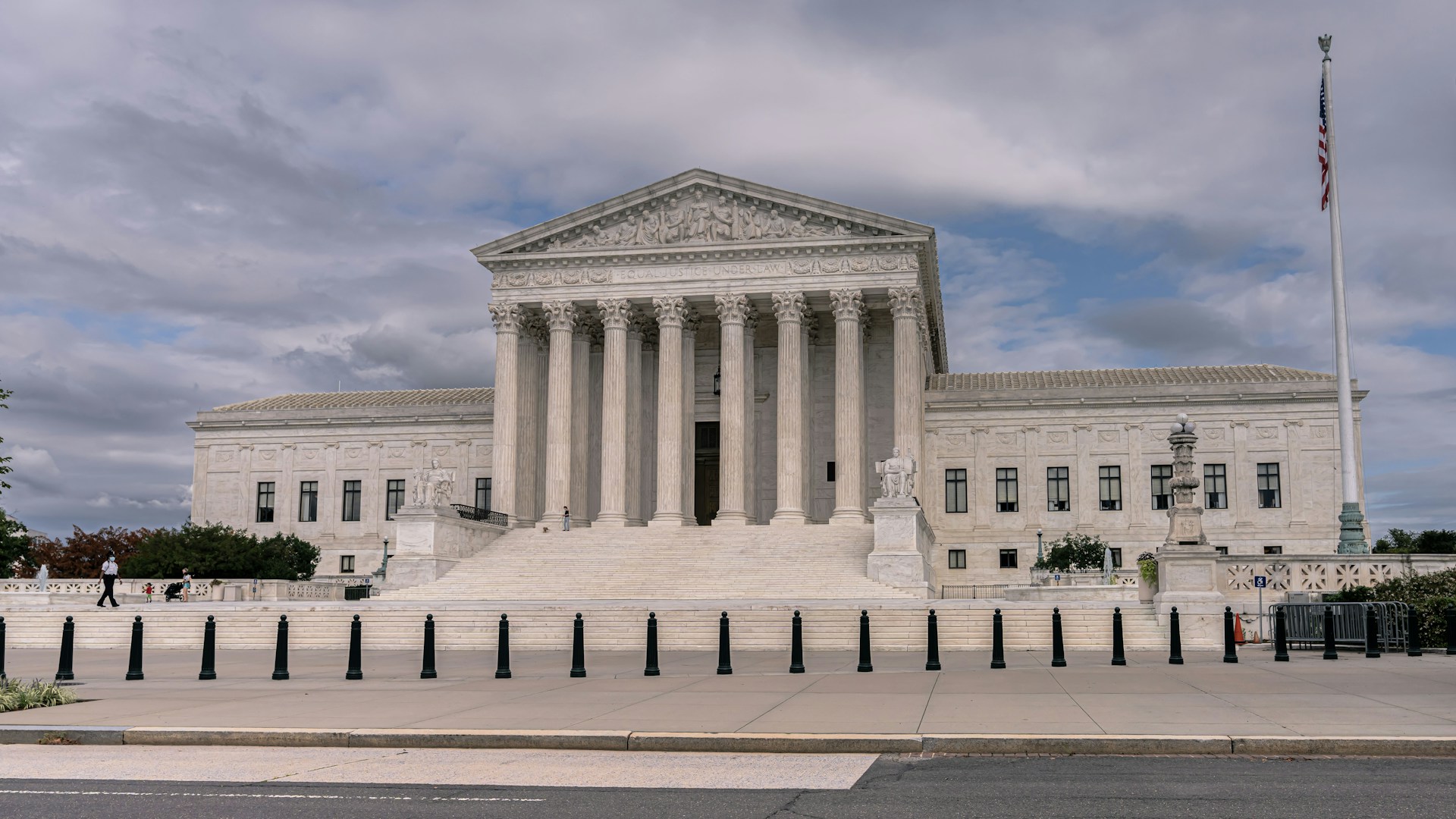
This morning, Friday, Dec. 12, the justices are gathering for their final regularly scheduled private conference of the year to discuss cases and vote on petitions for review. The petitions set to be considered – or reconsidered – address several significant topics, including the scope of Second Amendment protections, a unique response to climate change, and whether the government can seize a $95,000 plane over a six-pack of beer.
Here is a brief overview of five notable issues that are in front of the court at this week’s conference.
Second Amendment
As I’ve previously noted, the Second Amendment is in the spotlight this term. Already, the court has agreed to hear cases on whether gun owners need express permission to carry their weapons onto private property open to the public and whether a person who is “an unlawful user of or addicted to any controlled substance” may own a gun.
The justices are considering several petitions raising additional questions about the scope of the Second Amendment, including whether the federal ban on firearm possession is constitutional as applied to nonviolent felons; whether ammunition–feeding devices with the capacity to hold more than 10 rounds should be considered “arms” under the Second Amendment; whether law-abiding citizens have a right to possess AR-15s; and whether the federal government can restrict ownership of unregistered short-barreled rifles.
Most of these petitions have been considered at least once before and then relisted for this week’s conference. The petition on AR-15s may be particularly worthy of attention after Justice Brett Kavanaugh wrote in June that “this Court should and presumably will address the AR-15 issue soon” in a statement on the court’s decision to deny a similar petition.
Climate change
Suncor Energy Inc. v. County Commissioners of Boulder County stems from a Colorado city’s effort to use the judicial system to fight climate change. Boulder, Colorado, sued Suncor Energy and Exxon Mobil over their production and sale of fossil fuels, alleging that it was owed damages for the companies’ role in harming the environment.
The energy companies filed their petition with the Supreme Court after a Colorado trial court and the Colorado Supreme Court refused to dismiss the case. The energy companies contend that the city cannot use a state law to address interstate and international emissions and asked the court to bring an end to the dispute (as well as similar lawsuits popping up across the country). “There are few, if any, more consequential questions pending in the lower courts concerning the relationship between state and federal law,” the companies wrote.
This petition will be considered for the first time at today’s conference. Twenty-six states, the U.S. Chamber of Commerce, and 103 members of Congress, among others, have filed friend-of-the-court-briefs in support of Suncor Energy’s position, arguing that climate change needs to be addressed with federal action, not state lawsuits. The federal government also filed such a brief in September without being asked to by the court, a relatively rare step.
Qualified immunity and the First Amendment
After publishing information she gathered from a police officer in Laredo, Texas, in 2017, journalist Priscilla Villareal was arrested under a statute that makes it a crime to “solicit[ ]or receive[]” and then benefit from non-public information gathered from a government official. She sued the police officers and prosecutors involved in her arrest, alleging that, among other things, they had violated the First Amendment by interfering with the work of the press.
Last year, Villarreal asked the Supreme Court to revive her case after the lower courts dismissed it based on the officials’ qualified immunity. The justices sent Villareal’s case back to the U.S. Court of Appeals for the 5th Circuit for it to take another look in light of their June 2024 decision allowing a First Amendment lawsuit brought by a woman who claimed to have been retaliated against for criticizing a public official to move forward. On remand, the 5th Circuit upheld its decision to dismiss Villarreal’s case.
The court regularly sees (and denies) petitions for review about the scope of qualified immunity, so it’s unclear if this one will stand out. The justices, however, should be familiar with this case, and it’s notable that a diverse group of organizations, including the Cato Institute, First Liberty Institute, and Constitutional Accountability Center, have filed friend-of-the-court briefs in support of Villarreal’s petition.
Today’s conference is the first time this new iteration of Villarreal v. Alaniz is before the justices.
Religious accommodations
In their order list on Monday, Dec. 8, the justices addressed two cases on religion and vaccine rules. They sent a case on religious exemptions from school vaccine requirements back to the lower court for reconsideration and sought the federal government’s views in a case on a COVID-19 vaccine mandate for health care workers.
At this week’s conference, the justices are considering yet another petition on this topic. In Kane v. City of New York, the court has been asked to determine whether policymakers can distinguish between the official teachings of a religious group and the unique beliefs of individual members when crafting religious exemptions. The case was brought by teachers and school administrators who were denied religious accommodations under a since-repealed New York City mandate requiring public-education employees to be vaccinated against COVID-19. While Christian Scientists, Jehovah’s Witnesses, and others who belonged to religions that are known to oppose vaccination were exempted from the policy, accommodation requests from people who identify with faith groups that support vaccination, such as Catholicism, were often denied.
Excessive fines
In Jouppi v. Alaska, the justices have the opportunity to consider a memorable crime – and a potentially excessive fine.
The dispute centers on Ken Jouppi, a bush pilot in Alaska who in 2012 was charged with knowingly bringing alcohol to a village that prohibits it. (Jouppi’s passenger had two cases of beer packed in her bag, but most of the lower court proceedings have focused on one six-pack of beer that law enforcement officers described as clearly visible.) Jouppi was found guilty and sentenced to three days in prison and fined $1,500. But the case didn’t end there. For the past 13 years, state officials have been fighting for control of Jouppi’s plane, which they believe must be forfeited because it was used in the commission of a crime.
The trial court sided with Jouppi, holding that forced forfeiture of the plane, which is worth about $95,000, would represent “an unconstitutionally excessive fine,” according to Jouppi’s Supreme Court petition. An appeals court ordered the trial court to do a new analysis of Jouppi’s activities, but then the Alaska Supreme Court vacated that order and sided with the state, holding that forfeiture of the plane did not violate the Eighth Amendment’s excessive fines clause.
Jouppi has asked the Supreme Court to take up his case and resolve “a lower-court conflict over the standard for evaluating the gravity of a property owner’s offense under” that clause. The case is being considered for the first time today.
Looking ahead
The court is expected to add around 15 more cases to its oral argument docket for the 2025-26 term. We could hear as soon as this afternoon about new cert grants, and an order list showing denials from today’s conference (among other things) is expected on Monday, Dec. 15, at 9:30 a.m. EST.
Posted in Court Analysis, Potential Merits Cases
Cases: Does 1-2 v. Hochul, Vincent v. Bondi, Rush v. United States, Snope v. Brown, Kane v. City of New York, Miller v. McDonald, Gator’s Custom Guns, Inc. v. Washington, Suncor Energy Inc. v. County Commissioners of Boulder County, Duncan v. Bonta, Viramontes v. Cook County, Jouppi v. Alaska, Zherka v. Bondi, Villarreal v. Alaniz, Duarte v. United States