An interview with Jerry Goldman, founder of the Oyez Project

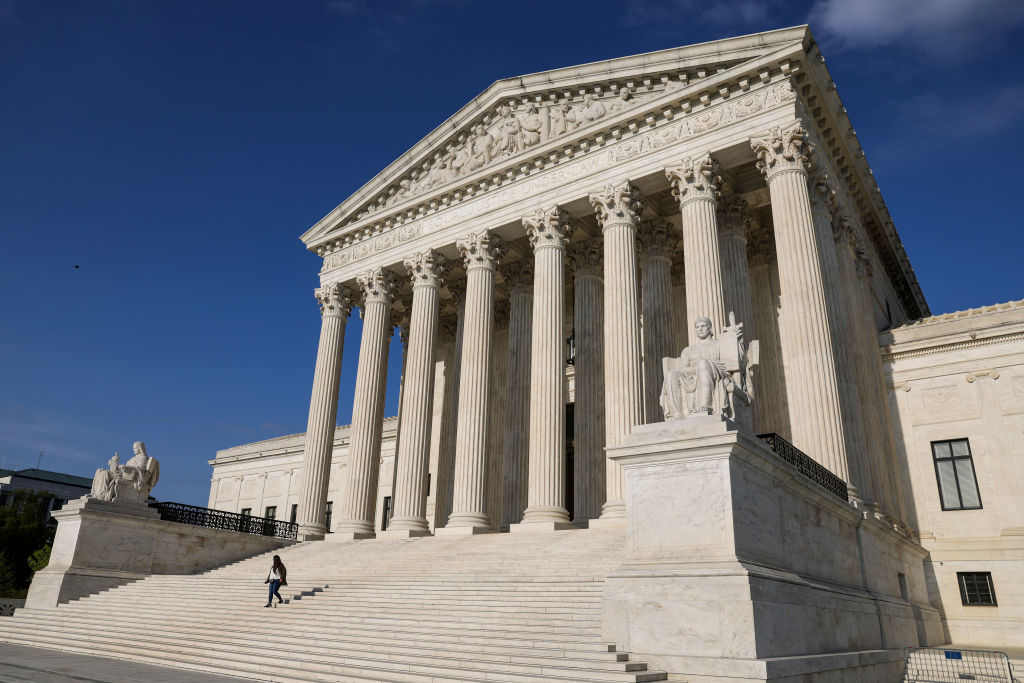
Welcome to our SCOTUS Innovators series, a new recurring column on people who have shaped our understanding of the Supreme Court.
A few weeks ago, I had the opportunity to chat with Jerry Goldman (a fellow Northwestern alum), founder of the Oyez project. For those unfamiliar with Oyez, this website was the first to digitize and share thousands of hours of Supreme Court oral arguments and opinion announcements, making it far easier for legal scholars and the public to engage with the court.
In our discussion, Goldman talks about the evolution of Oyez, the process behind saving decaying audio of the court, and his take on the court (such as advocating term limits for justices). For SCOTUSblog readers interested in technology and the Supreme Court (two things that, not too long ago, used to mix like oil and water), Goldman’s story offers an interesting lens into the court and the role Oyez – and technology in general – has played in helping to shape our understanding of it.
(Please note this interview has been edited for clarity and length.)
First off, how do you pronounce the name of your site?
If you’re talking about O-Y-E-Z, it’s the imperative of the French verb ouïr, which means “to hear.” So it’s pronounced “oh-yay,” although in some quarters it’s also “oh-yes” – the Old French version. In the Supreme Court, it’s pronounced “oh-yay,” so [when the marshal says it before the court goes into session] it means “hear ye, hear ye, hear ye.”
Who owns Oyez?
[Oyez’s] ownership is with the Legal Information Institute at Cornell, shared with Justia [and Chicago-Kent College of Law], which handles all the administration and upkeep. The project took me 25 years and I was happy with the result.
Were you always interested in the court? Tell us about your background and how that came to be – I read a bit about your [inspiration from] baseball cards.
When I was an undergraduate, I took an interest in political science and in the Supreme Court in particular. I had a mentor at that time who really encouraged and directed me. His name was Samuel Konefsky, and he was a constitutional historian. He was also blind, so I was his research assistant for a few years. I worked closely with him and admired him. Then I went to Hopkins and studied with Jay Woodford Howard, who was a Supreme Court scholar, and I focused on the court and the federal judiciary generally, then wound my way to Northwestern in 1975 and did that for 36 years, ending my run there in 2011.
Did your work as a research assistant [to Konefsky] inspire any part of Oyez’s multimedia components, or was that separate?
No. No one knew of the existence of Supreme Court audio back in 1967-68. It was there, but it was basically just stored at the National Archives. Eventually, a few researchers gained access but had to sign an agreement that they would never reproduce the materials and use them only for educational purposes. That ended in 1992 when political scientist Peter Irons published a set of audio cassette tapes of 23 hours of Supreme Court audio edited by him, and called it “May It Please the Court.”
The court tried to stop him because he violated this agreement, and the consequence of this [was that] it became newsworthy, and Nina Totenberg would broadcast excerpts from the tapes – which is exactly what the Supreme Court didn’t want to happen. In stopping him, they gave him enormous attention and then withdrew their lawsuit. I think he sold 75,000 copies of those tapes.
At that point, I had learned of the existence of these materials, and it bothered me that Irons would edit them – [for instance] he would edit a case involving Chief Justice Warren Burger, and in the argument, Irons would clip the audio and then say, “at this point, Chief Justice Burger tried to introduce a measure of humor into this very tense moment.” I’d like to hear Burger trying to engage in a little humor on the Supreme Court, so editing them is unfortunate. So that’s the start of what became the Oyez project.
How did you manage to do this with the early internet?
So the tapes were stored on big reel-to-reel, physical tapes at the National Archives, or two versions of these tapes. There were the original masters and then they had an entire set of reel-to-reel copies that they kept on the shelf.
And if you as a citizen were in the archives at College Park, you could tape the reel-to-reel tapes and then put on headphones, mount them on a tape machine and listen to them. So I went there several times, experimented with this and hired an undergrad music student to be my copyist.
I would give her DAT, a little recording device that records digitally to tape, not analog to digital, but in a tape medium, and I equipped her with this tape recorder and commissioned her to record these giant reel-to-reel tapes at my direction. She did a poor job, but it was a start.
I then got enough grant money to figure out how to do it in a better way and ultimately [made] an agreement with the National Archives that I could make archival, high quality digital copies, as long as I provided a copy of the copies to the National Archives. I would create one, and I would commission two copies, one for my use, and one that went back to the National Archives. So I essentially, with my grant money, helped them digitize their decaying collection of reel-to-reel tapes.
There are a lot of problems with these old tapes. They decay and sometimes the Supreme Court may not have kept their recording decks up to standard and may not have been serviced very well. So, there were variations (like the voices slowing down) that we tried to correct for. Then there was something called “sticky shed syndrome” – in the 1980s the manufacturers of reel-to-reel tapes changed the formula for the iron oxide used on the acetate that recorded the audio, and they didn’t recognize the long-term consequence of storing the tapes in this new formula and the tapes started to stick together.
The only way to undo that is to bake the reel in a toaster oven. At a certain point, you take it out, mount it on the tape device, run it through and record what’s on there. At the end, the tape would be destroyed. It was like Mission Impossible.
It became an issue in the Supreme Court because they, being frugal, they had a stack of blank reel-to-reel tapes and they didn’t know about this problem. So they continued to record on these poor-quality reels.
When did the Supreme Court begin releasing audio of arguments?
In November of 2000, the court heard two really important arguments after the 2000 election – Bush v. Palm Beach County [Canvassing] Board and then the follow-up that became Bush v. Gore. The press was all over the Supreme Court: we want video, we want the people to see – the outcome of the presidency hinges on these oral arguments. The court resisted and said no, we’re not doing that.
At the time, William Rehnquist was chief justice, and I faxed [him]. My position was: the court releases these audio[s] at the end of the term; because of the importance of these cases, would the court consider releasing the audio to the standard news outlets at the end of the session? And the only time that Rehnquist ever replied to my correspondence was a fax to me saying that’s what they’d do.
So it became policy for cases of great public importance. Then they changed the game because they started identifying who spoke in the transcript. In the Oyez project we had to identify [those voices] manually. I got really good at that and could tell from the first utterance.
Roberts was very polite – “May I interrupt you? I really would like to ask a question.” Justice [Byron] White would begin by clearing his throat – he was still a smoker, and that was apparent. Each justice had particular tics, and we had a set of key commands. I could sit through an hour of oral argument in about five minutes.
Do you know if the court has any impressions of Oyez?
The clerks all know about this. They’ve gone to law school and they’ve used it, but this [acknowledgment] is only informally. I’ve never had any response to this project – I’ve had contacts with the court over the things that I requested them and in the earlier version of website, I also included virtual reality tours of the chambers of a few justices and also of the courtroom and the conference room.
What was that experience like?
I used an early version of digital camera to take 360-degree images of these locations and then stitch them together so that you could basically with your mouse pan the room and the chambers. I enjoyed doing that. It was a lot of work, but a lot of fun. And the court gave me permission to do that, so I was pleased about that.
When I did John Roberts’ chambers, he made me come back to add some things into the VR that weren’t in the chambers to begin with, because he was very proud of these possessions, but they were in other parts of his suite of offices. And Justice Ruth Bader Ginsburg had a lot of tchotchkes in her office, and I focused on those. Getting to the court is an important experience, and I really want the public to have that access – it really shouldn’t just be limited to the handful of people who can gain access. I was lucky enough to befriend the marshal at the time, Pamela Talkin. She was helpful to me in my effort to build the Oyez project.
Could you tell me about your new project, On the Docket, [which uses AI to produce “videos” of the justices during recorded opinion announcements]?
When the court announces an opinion, that’s the important part. There’s some entertainment value in an oral argument, but the real money shot is in the justices rendering an opinion and then explaining it in their own words, paraphrasing their written opinion to the public.
But the public that’s sitting there is only about 200 people – not 50 million. That was the brilliant inspiration for On the Docket. Our mission is not to deliver On the Docket primarily on a website, but through social media. The materials we’re producing now we share on YouTube, X, TikTok, maybe Instagram. And just in two weeks – mind-blowing – 100,000 views of two cases, just two cases. I don’t think Gen Z or Gen Alpha have the patience to listen to 23 minutes of Sonia Sotomayor, but if I give them a minute of different chunks of it, they will.
Given On the Docket’s focus on opinion announcements, what are your thoughts on the Supreme Court providing video – or at least same-day audio – of those announcements?
I actually asked the chief justice about this. One of my students, Benjamin Snyder, ended up clerking for John Roberts and arranged for me and my seminar to visit the court and meet with the chief justice. I put that question to him, and the takeaway was – because these opinion announcements are statements drawn up individually by the justices and not reviewed – the plan had always been to just let that justice have his or her say, and then wait until the end of the term and package it up with all the other audio. If revealed same day, perhaps there would be some grandstanding; I’m just reading into his thoughts, but I don’t know if that’s the case.
In any event, I still think they should be public. My mission now – I estimate there are about 300 hours of these opinion announcements going back to the early 1990s and maybe even earlier – is that I might find the support to create videos of all of them and distribute them on social media.
You’ve spoken about term limits for justices. Are you an advocate of them?
I think it’s a good idea because before 1950 the average term a justice served was somewhere in the 20–22-year period on average, and today it’s over 35 years. When you are my age serving on the bench, as some justices do, you really lose touch with the vast majority of the public who are probably under 50 – and so many of them are gathering their information in ways that people in my age cohort can’t really understand, like YouTube and Instagram. It’s a different world we live in compared to you. Ending service after 25 years seems like a good idea. You’re still a justice, but you don’t serve [for life]. I think there are satisfactory ways to overcome what some think of as a constitutional impediment – service for life. Until I hear a better argument on the other side, that’s my position. I think it’s always political – you’re not going to remove politics – but it will moderate the politics, and that’s why I like the idea.
Is there anything you think would be important for our readers to know that I haven’t asked already – about On the Docket, Oyez, or even your journey developing both?
I faced enormous opposition from my colleagues at Northwestern when I decided this was my mission, and I stuck to my view that this was really important. It takes the courage of your convictions, and I was ready to fail with the Oyez project – and I succeeded, in my view, remarkably well.
Many of my colleagues – all of them, in fact – spent their careers writing articles and books that frankly very few people are reading today. There are tens of millions of people who listen to these arguments and engage in debates and learn from them. As a consequence, I feel like I have surpassed many of my colleagues in the influence I’ve had on the public, so I’m pleased about that. But there’s always pressure in these environments, and there was a lot of pressure put on me. In the end I had the resources from the National Science Foundation, from private funders, to keep the Oyez project going, and it turned out to be a great success. So if you have an idea and you believe in it – hold fast and pursue it.
Posted in Featured, SCOTUS Innovators