The UK Supreme Court

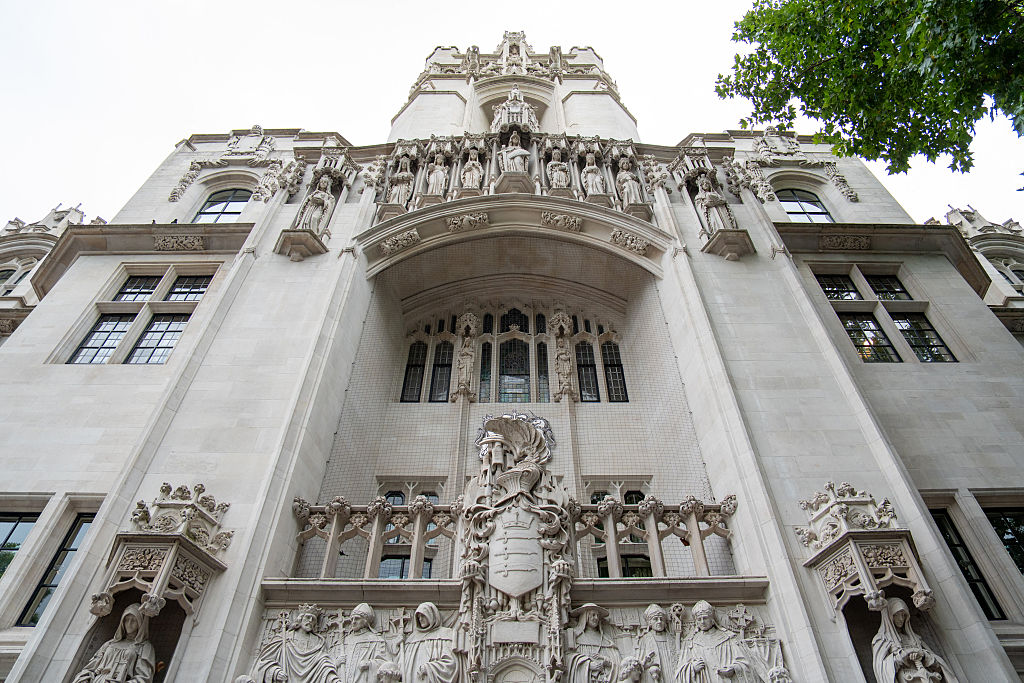
Welcome to SCOUTSblog’s newest recurring series, in which we interview experts on different supreme courts around the world and how they compare to our own. For our debut column, we figured it only made sense to go back to the mother country and its mother court. And to help us shed some light on the Supreme Court of the United Kingdom, we could think of no one better than Mark Elliott.
Mark Elliott is Professor of Public Law at the University of Cambridge and a Fellow of St Catharine’s College, Cambridge. He has previously served as legal adviser to the House of Lords Select Committee on the Constitution and as Chair of the Cambridge Law Faculty.
Our written interview is below.
So let’s start with the simple stuff. How many judges are on the Supreme Court of the United Kingdom?
There are usually 12 justices, including the president and deputy president, at any time, unless vacancies have arisen that have not yet been filled. There is also provision for certain additional judges to sit in the UK Supreme Court, including recently retired justices who have not yet reached the mandatory retirement age.
How are these judges selected?
Supreme Court justices are appointed by an independent selection commission. The process is set out in the Constitutional Reform Act 2005 and in the Supreme Court (Judicial Appointments) Regulations 2013. Vacancies are advertised, applicants are shortlisted on merit, and interviews are held. The selection commission recommends its preferred candidate to the Lord Chancellor (a government minister with responsibility for the administration of justice) who can accept the recommendation, or ask the commission to reconsider or reject the recommendation. Once the Lord Chancellor accepts a recommendation, the successful candidate is appointed by the King on the advice of the Prime Minister; the roles of the King and the Prime Minister are merely formal. The degree of political involvement in the appointment of UK Supreme Court justices is therefore very limited.
Do these judges serve terms – if so, of what length?
UK Supreme Court justices are appointed to the retirement age of 75. That retirement age is set by statute in the Public Service Pensions and Judicial Offices Act 2022.
Does the UK Supreme Court only hear appeals? Are there any cases in which it has original jurisdiction?
The UK Supreme Court’s jurisdiction is almost entirely appellate in nature. However, in relation to certain issues concerning the UK’s system of devolved government, the UK Supreme Court has original jurisdiction. Under devolution arrangements in the UK, three of the UK’s four constituent nations – Scotland, Wales, and Northern Ireland – have their own legislatures and administrations. (No comparable arrangements exist in relation to England.) Those devolved institutions have authority to act in areas that are not “reserved” to the UK level of government.
This can give rise to disputes about whether a devolved institution has the authority to act (just as disputes can arise about whether state-level institutions have authority to act in a federal system). In certain circumstances, such matters can be determined by the Supreme Court in exercise of original jurisdiction. That jurisdiction extends both to questions about legislative and administrative acts already undertaken by devolved institutions and to legislation that is in the process of being enacted by devolved legislatures.
As I understand it, the UK has no written constitution. Does this mean its judges only interpret statutes?
It is not part of the UK Supreme Court’s role – and neither is it part of the role of any other court in the UK – to strike down Acts of the UK Parliament. This means that in relation to such legislation, the court’s role is limited to an interpretative one. In interpreting legislation, the court applies a presumption – which, in some circumstances, can be a very strong presumption indeed – that Parliament does not intend to interfere with fundamental rights and values that form part of what is sometimes called the “common law constitution.” The result is that legislation that appears to remove or otherwise interfere with such rights or values might be interpreted – in the absence of explicit or otherwise extremely clear provision otherwise – compatibly with such rights or values. This approach is augmented by the Human Rights Act 1998, which requires courts, so far as it is possible to do so, to interpret legislation compatibly with the rights set out in the European Convention on Human Rights.
As well as interpreting legislation, the UK Supreme Court also resolves disputed questions about the common law. For instance, significant areas of private law, including substantial parts of the law of tort and the law of contract, are formed principally by the common law rather than consisting of rules laid down in statute.
Does the UK Supreme Court overturn Acts of Parliament – if so, how often does this occur?
Because the UK Parliament is “sovereign,” no court can strike down, or overturn, an Act of Parliament — albeit that, as explained above, the courts, including the UK Supreme Court, can deploy strong interpretive powers in order to read Acts of Parliament compatibly with common law constitutional rights and values and with the rights set out in the European Convention on Human Rights. In contrast to the UK Parliament, the devolved legislatures (the Scottish Parliament, the Senedd (i.e., the Welsh Parliament), and the Northern Ireland Assembly) are not sovereign. Rather, they have limited powers. Legislation enacted in breach of those powers can be struck down by the courts, including the UK Supreme Court.
While the Human Rights Act 1998 does not authorise the Supreme Court (or any other court) to overturn Acts of the UK Parliament, it does permit certain courts, including the UK Supreme Court, to issue “declarations of incompatibility.” Such declarations do not affect the validity or enforceability of Acts of Parliament. Instead, they trigger administrative powers to amend Acts of Parliament that have been found to be incompatible with the European Convention on Human Rights. Although there is no domestic legal obligation to remedy such incompatibilities, failure to remedy them may result in proceedings against the UK in the European Court of Human Rights, which, if successful, triggers the UK’s obligation in international law to align domestic law with the European Convention. This means that declarations of incompatibility, while not amounting to a strike down power, are more potent than they might at first appear.
Has anything changed with regard to the UK Supreme Court’s powers since “Brexit”?
While the UK was a member of the European Union, it was subject to the “primacy” of EU law. This meant that UK courts, including the UK Supreme Court, could “disapply” Acts of Parliament that were incompatible with relevant EU law. For practical purposes, disapplication was equivalent to overturning or striking down the relevant legislation. Although the UK has now left the EU, UK courts, including the UK Supreme Court, retain the power to disapply Acts of Parliament that are incompatible with relevant aspects of the EU-UK Withdrawal Agreement.
Are cases decided by a simple majority? How is the opinion writer assigned?
Cases are decided by a simple majority. Although the UK Supreme Court consists of 12 justices, it usually sits in panels of five. Larger panels (e.g., seven or nine) are used in cases that are considered to be particularly important (usually in constitutional terms). The size and composition of panels are determined by the president [of the UK Supreme Court]. The process by which such matters are determined is opaque and can therefore give rise to concerns about membership of the panel potentially influencing the outcome of the case. The presiding judge (that is, the president, the deputy president, or the next most senior judge) determines who writes the leading judgment.
Is there a tradition of concurrences or dissents on the court?
Justices are free to write concurring or dissenting judgments. However, the court is increasingly likely to give a single judgment. For example, in 2023 and 2024, single judgments were given in 77% of cases.
What were some major issues recently decided by the UK Supreme Court?
Perhaps the most discussed recent UK Supreme Court decision is its judgment in the For Women Scotland case (For Women Scotland Ltd v The Scottish Ministers [2025] UKSC 16), in which the court held that in the Equality Act 2010 – the UK’s principal legislation concerning equality and non-discrimination — terms such as “sex,” “man,” and “woman” refer to biological sex rather than to gender identity, even in relation to those who have undergone a legal process to obtain a “gender recognition certificate.” This has significant implications for how and to what extent sex-based rights and the rights of trans people are accorded legal protection.
What have been some other particularly controversial issues decided by the UK Supreme Court in recent times?
The UK Supreme Court has only been in operation since 2009. Before that, the Appellate Committee of the House of Lords served as the UK’s court of final appeal for most matters. The Appellate Committee was functionally independent but formally part of Parliament. The abolition of the Appellate Committee in favour of a new UK Supreme Court was intended, among other things, to establish a clearer separation between judicial and legislative functions, thereby embedding the separation of powers principle to a greater extent.
The UK Supreme Court’s judgment in the Miller II case (R (Miller) v Prime Minister [2019] UKSC 41) remains one of its most controversial, at least in the field of constitutional law. When the then Prime Minister, Boris Johnson, attempted to “prorogue” (suspend) Parliament for five weeks at a crucial point in the Brexit process – apparently with the aim of preventing Parliament from requiring the administration to deviate from its proposed approach to Brexit – the UK Supreme Court held that he had acted unlawfully by undermining, without adequate justification, Parliament’s capacity to discharge its core legislative and accountability-related constitutional functions. The court held the attempted prorogation to be void, and Parliament reconvened immediately. The judgment divided opinion among constitutional scholars; some viewed it as appropriate judicial enforcement of fundamental constitutional principle that ensured Parliament’s capacity to discharge its role without undue interference by another branch; others considered it an egregious instance of judicial overreach by way of the court having involved itself in what, according to some commentators, was an ultimately political question.
The United States Supreme Court is often seen as partisan. Does the UK Supreme Court have a partisan reputation?
The UK Supreme Court does not have a partisan reputation. In the UK, adjudication, including at the supreme court level, is generally considered to be a technical matter that does not require attentiveness to the political views or ideological leanings of judges. This is reflected in the appointment process, which does not involve any public or parliamentary scrutiny stage and which is not considered to be a political process. The emphasis is on appointing “on merit,” which is taken to refer to the technical legal qualities of candidates. Lack of interest in the “politics” of judicial candidates and appointees is likely attributable to the absence of strike-down powers and, until relatively recently, to the limited role played by fundamental human rights in the adjudicative process.
As such, UK judges have historically not tended to have to engage as directly as judges in many other systems with the sort of highly contentious questions to which fundamental rights cases can give rise – and, even now that they must do so under the Human Rights Act, the stakes are not, at least formally, as high as in some other jurisdictions, given the absence of strike-down powers. However, even if not framed in political or partisan terms, it is clear that individual judges’ ideologies – concerning such matters as the appropriate extent of the judicial role versus the latitude that ought to be accorded to the political branches of the constitution – can exert significant influence on how cases are decided. This is a matter that increasingly interests legal scholars in the UK; however, unlike in, say, the United States, this is not an issue that features prominently (or at all) in public, media, and political debate.
Would you say the UK Supreme Court is considered a particularly powerful institution – say, compared to the Prime Minister or Parliament?
The UK Supreme Court clearly is a powerful institution, given that it serves as the court of final appeal for most matters in the UK. However, its public profile is relatively limited, and certainly more limited than that of some other supreme courts around the world. The primary reason for that is no doubt the fact that the UK Supreme Court’s powers are relatively limited, given that it cannot strike down or otherwise decline to apply Acts of the UK Parliament (except in very limited circumstances relating to the EU-UK Withdrawal Agreement). That said, the prominence of the court’s role today is greater than in the past not least because of the contentious nature of the some of the issues it must now confront under the Human Rights Act 1998 coupled with its power under that legislation to declare Acts of Parliament incompatible with the European Convention on Human Rights.
If you feel comfortable responding, what aspect of the UK Supreme Court do you see as superior to that of the Supreme Court of the United States? What aspect of the Supreme Court of the United States do you see as superior to that of the UK Supreme Court?
There are obvious and important differences between the two courts. One argument that is sometimes made in favor of the UK system is that it is much less politicized than its US counterpart. While there is no doubt some truth in this view, it is also highly reductive. It might, for instance, be argued that the UK system is merely perceived to be less politicized because there is in the UK a misplaced assumption that the adjudicative process is not sensitive to political or ideological considerations in the absence of powers judicially to strike down legislation — whereas in reality, UK judges must now, under the Human Rights Act, confront questions every bit as contentious as those that can arise under the US Constitution. From another perspective, therefore, it might be argued that a strength of the US system is that it openly acknowledges and confronts the ideological and political aspects of adjudication that inevitably arise, whereas in the UK there is an unwillingness directly to acknowledge and address such matters.
Posted in Featured, Recurring Columns, Supreme courts around the world