Justices appear dubious of challenge to constitutionality of foreclosure sales

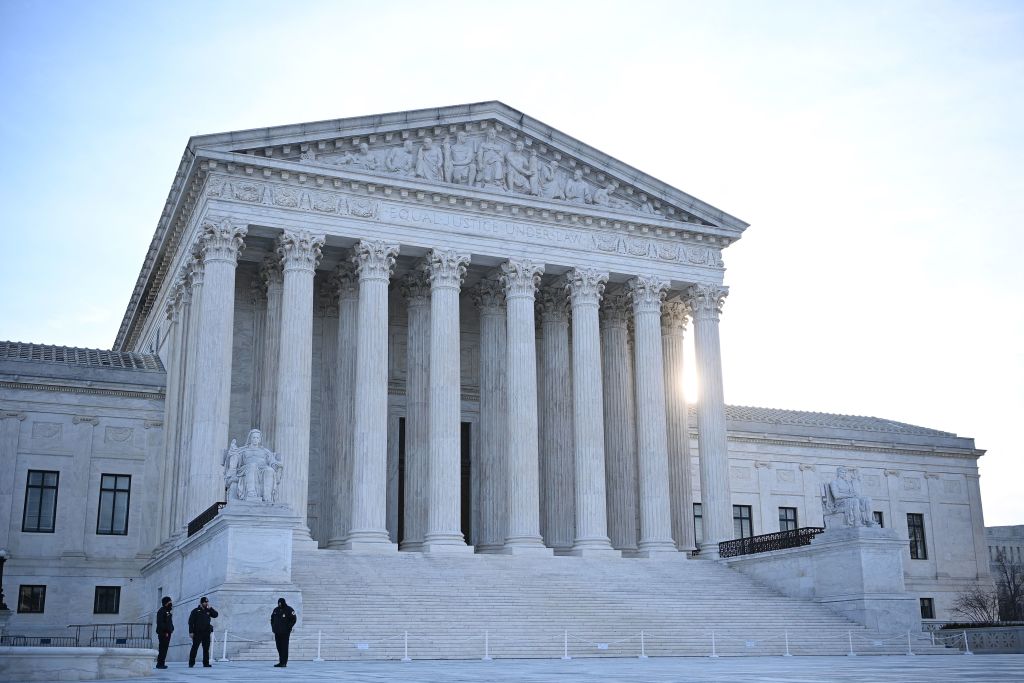
The argument yesterday in Pung v. Isabella Countyhad two distinct threads. On the one hand, the justices who discussed the question presented seemed to have no doubt that they would reject the idea that the customary practice of selling real estate at an auction to recover delinquent taxes amounts to a taking without just compensation. On the other hand, multiple justices were incensed at what appeared to them to be the high-handed treatment of the taxpayer by the local government.
On the legal question, the complaint of the taxpayer (Michael Pung) is that when the county sold his property at a foreclosure sale based on unpaid taxes, the price at the foreclosure sale was less than the fair-market value of the property. In his view, that means that the takings clause of the Fifth Amendment (that “private property” shall not “be taken for public use, without just compensation”) requires the county to compensate him for the shortfall – to write him a check for the difference between the fair-market value of the property (estimated by an appraiser) and the price it sold for when the county auctioned it at a public sale.
During oral argument, the justices identified several difficulties with Pung’s position. For one thing, Pung is challenging the constitutionality of something that pretty routinely has been going on in every American jurisdiction since before the adoption of the Constitution. So it wasn’t entirely unfair of Justice Clarence Thomas to ask Philip Ellison (Pung’s counsel), in the first question of the morning, what he would “do with the fact that the English and American legal traditions seem to permit these sorts of foreclosures?” In a similar vein, Justice Sonia Sotomayor challenged Ellison to “[g]ive me a holding from a court in our 250-year history where we have said that the measure … on a tax foreclosure is fair market value, not the auction price.”
Another issue, related to the first one, is that accepting Pung’s position probably would bring an end to the use of foreclosure sales to force the payment of taxes. As Justice Elena Kagan pointed out, repeatedly, the logic of Pung’s position is that when the government has sold the property of the delinquent taxpayer at an auction, then, in the normal case where the distressed sale at an auction does not produce the fair market value, the jurisdiction would have to come out of pocket and use other funds to repay the delinquent taxpayer for the “shortage” at the sale. Justices Ketanji Brown Jackson and Amy Coney Barrett seemed particularly taken with this problem, finding it unfair to suggest that other taxpayers, the ones that are not delinquent, should have their taxes paid to compensate those that refused to pay their own taxes. As Jackson commented, it “seems like real unfairness” to “the rest of the American people, that we are paying you because you didn’t pay your taxes and the government had to foreclose on your house.”
Still another difficulty for Pung’s argument is that the Supreme Court has had a case in the past about whether a disappointed landowner can challenge a foreclosure sale based on a low price. In that case, Justice Antonin Scalia forcefully rejected the challenge, explaining that property subject to a foreclosure is “simply worth less” because it is subject to such a sale. During argument, Justice Brett Kavanaugh actually read from Scalia’s opinion, and several other justices pointed to the discussion as the court’s most relevant treatment of foreclosure sales.
All of that suggests that anything the court says about the legal question on which it granted review is likely to reject Pung’s position. But there is good reason to think that there will be pressure at least to consider the underlying situation. Pung insists to this day that in fact the taxes are not owed, and of course it is difficult on the basis of appellate briefs to be sure of anything beyond the reality that the Michigan courts decided that the failure to pay justified the foreclosure. But Sotomayor and Justice Neil Gorsuch seemed to think that the procedures followed here were so appalling that they cry out for some relief. Gorsuch, for example, simply could not accept that for a tiny tax debt (less than $3,000) a property assessed at about $200,000 was sold at foreclosure. Both justices seemed also to believe that the process moving toward the foreclosure sale occurred at an inappropriately brisk pace.
To be sure, other justices saw the fairness issue quite differently, asking pointedly why, if the property really was worth almost $200,000, as Pung contends, he didn’t simply sell it or borrow $3,000 against it to pay the taxes. As Justice Samuel Alito put it, “if your client had $190,000 equity in this house … couldn’t your client have gotten a loan using that as collateral, paid the taxes, and there never would have been a sale?” Kagan and Jackson echoed that same point.
One other topic that came up offers a potential way to avoid simply rejecting Pung’s argument. The question on which the justices granted review does not involve the fairness or propriety of the sale procedures, but rather the question of compensation. One possible resolution, pressed by the solicitor general – and received with apparent sympathy by at least some of the justices – is that the court could reject Pung’s request for compensation, but send the case back to allow the lower court to consider whether he should have an opportunity to argue that the sale procedures were so fundamentally unfair as to justify invalidation, perhaps under the due process clause. Given that, it is hard to be sure exactly where the court will land. But I don’t think there is much chance they are going to order the county to pay the compensation Pung is seeking.
Posted in Court News, Merits Cases
Cases: Pung v. Isabella County, Michigan