Only electoral reform, not the Supreme Court, can protect against an American Caesar

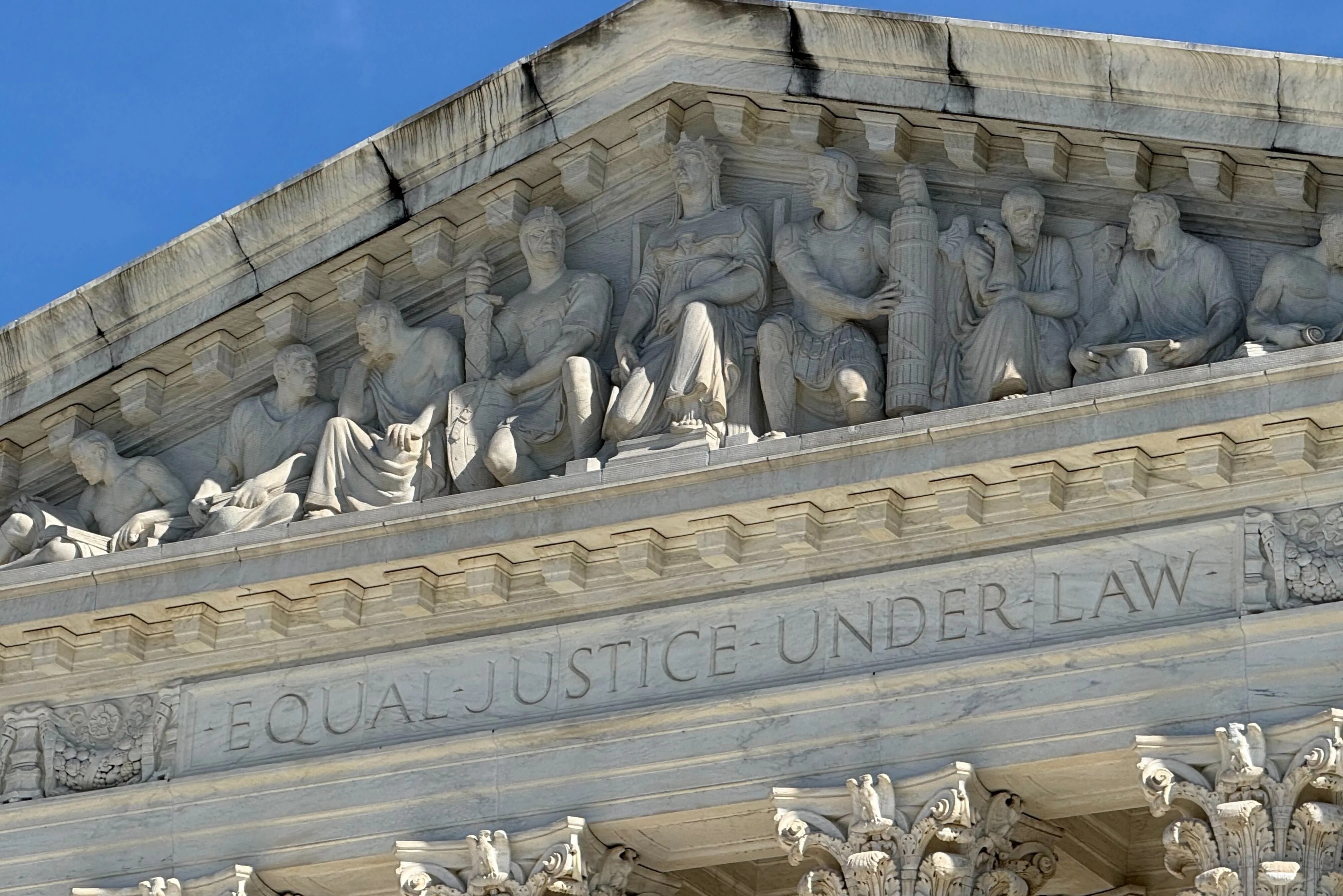
Justice, Democracy, and Law is a recurring series by Edward B. Foley that focuses on election law and the relationship of law and democracy.
The defining theme of the first year of Donald Trump’s second presidency, at least from the perspective of those who focus on the Supreme Court, has been whether the court is able and willing to protect America’s constitutional democracy from a president who seeks to be an autocrat.
From the first days of the Department of Government Efficiency last January to the wanton killing of Renee Good this month, Trump’s second term has been characterized by his desire to impose his will, including through ICE agents and other federal government personnel, without regard to any constitutional constraints. He wants unilateral and absolute power over every federal agency, including the Federal Reserve, and every public policy, including tariffs, regardless of what the law as enacted by Congress provides. In his use of the military against Venezuela, both for the boat strikes and Nicolás Maduro’s capture, Trump has made clear his disdain for the Constitution’s assignment to Congress – not the president – of the power to determine when the United States goes to war against a foreign nation.
Trump and his administration have shown no respect for the Constitution’s protection of fundamental civil liberties, including freedom of speech. He has threatened television networks with the revocation of their broadcast licenses because he dislikes their content. He has targeted law firms because of the clients they represent, contravening the Constitution’s commitment to the right of counsel for all persons in this country. And the violations of due process and related rights to be free from arbitrary violence perpetrated by a police state go well beyond Good’s tragic death to encompass all the inflictions imposed by ICE, including utterly lawless detentions and deportations.
The Supreme Court has been relatively quiescent this past year in response to Trump’s wholesale assault on the constitutional order. In April, the court did issue a 1 a.m. ruling to block the lawless deportation of individuals without any hearing whatsoever. In December, the court halted Trump’s deployment of the National Guard to Chicago. And the court has yet to issue its decision in the big tariffs case, which potentially could be a significant precedent that reins in Trump’s overreaching. But mostly the court has allowed Trump, at least temporarily, to amass powers in keeping with a theory of the presidency that threatens to disrupt the balance of authority between the legislature and the executive that the founders had hoped to achieve.
In its disposition of the many cases on the so-called interim or “shadow” docket since the start of Trump’s second term, the court has largely treated Trump as if he were a normal president leading a normal administration acting in good faith. Whether this posture is naïve or strategic, it looks increasingly inappropriate as Trump and his administration have become ever more brazen in defiance of constitutional rights and the rule of law.
Surely, for example, in light of how quick ICE agents are to pull the trigger and kill someone like Good, Justice Brett Kavanaugh must have second thoughts about the way he depicted ICE’s behavior in his Noem v. Vasquez Perdomo concurrence. In that September opinion, to accompany the court’s refusal to constrain ICE raids in California despite the serious Fourth Amendment problems with how ICE was conducting those raids, Kavanaugh downplayed the risk to U.S. citizens of any encounters they might have with ICE agents. “It is not necessary,” Kavanaugh wrote, “to address [excessive] use-of-force” by ICE agents “because the Fourth Amendment’s reasonableness standard continues to govern the use of force and to prohibit excessive force.” That line is hard to hear again after Good’s death.
***
Even if one wishes the court had done more to constrain Trump and his administration during this past year, it is essential to recognize that there are limits on what the court can do to safeguard constitutional democracy from the danger of a despotic president. Separation of powers compels the court to refrain from interfering with the president’s decision to order a military operation, and thus no matter how unconstitutional it may have been for Trump to order military operations against Venezuela without congressional authorization, precedent precludes the court from enforcing compliance with the Constitution in this context. And even if the court in September had endeavored to stop ICE from using excessive force, no injunction could have guaranteed that Good would not have been killed by Jonathan Ross in the specific circumstances of their encounter. The only way to prevent that senseless tragedy would have been to have a different president with a different policy towards the use of ICE to tackle the problem of illegal immigration.
Thus, anyone who has been looking to the Supreme Court to save constitutional democracy from a tyrant like Trump must recognize instead the necessity of reforming the nation’s electoral procedures. Most of the public discourse this past year on saving the Constitution from Trump has been premised on the assumption that Trump won in 2024 because he actually was the genuine choice of the nation’s voters – unlike in 2016, when he did not win the national popular vote despite his Electoral College victory, or in 2020 when, despite his insistence otherwise, he truly lost to Joe Biden (in both the Electoral College and the national popular vote). But in fact, this premise is incorrect, and it is essential to understand why to accurately diagnose the disease that is currently afflicting the U.S.’s democracy and thus to recognize that the necessary remedy is not reliance on the Supreme Court but instead a specific type of electoral reform.
To be sure, Trump won the national popular vote in 2024, as well as the Electoral College, meaning that more voters indeed preferred him to be president than Kamala Harris. But this fact does not mean Trump was the most popular candidate who ran for president in 2024. Instead, Nikki Haley almost certainly was. But the existing electoral system did not let this preference prevail – and the country is living with the consequence of Trump as president instead of Haley, contrary to what America’s voters actually wanted in 2024.
To understand this crucial point, we need to recognize that although Haley was not more popular than Trump among Republican primary voters, she was more popular than him among all the nation’s voters. We know this from the polling that occurred while she was still a candidate during the primaries. She consistently outpolled Trump in opposition to Biden, who was still the Democrat running at the time. Consequently, if all U.S. voters had been given a choice between Haley and Trump in the November 2024 general election, Haley undoubtedly would have been the preference of more voters.
But the existing electoral system did not let all of the voters make a choice between Haley and Trump – the two most popular candidates – in the November general election. Rather, the process of presidential primaries prevented Haley from being on the general election ballot.
One might think that Haley could have run as an independent candidate and get on the November ballot that way. The problem, however, is that the structure of the November general election and its ballot does not enable an independent – or indeed any – candidate to demonstrate that they are preferred by a majority of voters compared head-to-head to either the Democrat or Republican on the ballot. The standard ballot that states currently use for presidential elections enables voters only to indicate which candidate among all of them on the ballot is their top choice. Whichever candidate on the ballot wins the most top-choice votes wins the election, which in the case of the current Electoral College system is all the electoral votes from that state, with the national popular vote winner then being the candidate with the most top-choice votes nationwide. But winning the most top-choice votes does not necessarily mean that a candidate is preferred by a majority of voters compared to each opposing candidate.
Instead, whenever there are more than two candidates on the ballot running for the same office, the candidate with the most top-choice votes may have only a plurality (more than anyone else), and not a majority (more than half). Had Haley been on the November 2024 ballot along with Trump and Kamala Harris, she likely would not have received the plurality of top-choice votes. Trump or Harris would have. (It might have been Harris, not Trump, because some of the voters who chose Trump in November 2024 when Haley wasn’t an option would have voted for Haley, making Harris the plurality winner over Trump.) But even without a plurality of top-choice votes, Haley still would have been preferred by a majority of voters over either Trump or Harris in a head-to-head competition against each of those other two. A majority of voters would have preferred her over Trump because all of Harris’ voters plus her own would have chosen her over him. And a majority of voters would have preferred Haley over Harris, as all of Trump’s voters would have preferred Haley over the Democrat – indeed, Haley’s majority over Harris would have been larger than Trump’s for the same reason that Haley outpolled Trump over Biden earlier in the race.
Haley would have been what is called a “Condorcet winner” in the literature on electoral systems, after the French mathematician (the Marquis de Condorcet) who explained that determining the true preference of an electorate whenever there are more than two candidates requires a ballot that permits voters to indicate their preference for each candidate when pitted directly against each other candidate.
Think of it this way: suppose hypothetically that Haley had been on the November 2024 ballot along with Trump and Harris, but the ballot had permitted voters to indicate only their top-choice preference, and those top-choice preferences had split as follows: Harris, 45%; Trump, 40%; Haley, 15%. In that case, you wouldn’t know which candidate represented the will of the majority because none of the three reached 50% with the electorate’s top-choice preferences split three ways. But as Condorcet showed, you could – and should – have a ballot that reveals that 60% of voters prefer Haley to Trump, and 55% prefer Haley to Harris. (This would be true if, oversimplifying a bit for sake of illustration, all of Harris’ voters would prefer Haley over Trump, and all of Trump’s voters would rather have Haley than Harris.) There are different ways to design a ballot that enables an election to identify a Condorcet winner, but the key point of the democratic principle that Condorcet demonstrated is that a candidate whom a majority of voters prefer to each alternative is the one who mathematically best expresses the collective preference of the entire electorate.
***
The bottom line is this: America’s constitutional republic will not be safe from the threat of a Caesar-like dictator unless and until it adopts a system for presidential elections that enables Condorcet winners to prevail. In fact, late in life James Madison himself recognized that if one wishes to be sure to elect the candidate who is “the real choice of a majority of his Constituents,” it is necessary that a ballot that permits voters to demonstrate that a candidate “who is third on the list of votes” in terms of top-choice preferences nonetheless “would in a question with either of the two first, outvote him, & consequently be the real preference of the Voters.”
In recognizing this key truth, when writing a letter to a friend in 1823 on how best to change the method of electing presidents, Madison did not mention Condorcet by name, but it is clear from the substance of what Madison wrote that he had digested the content of Condorcet’s work on elections. Condorcet had only completed that work shortly before the adoption of the Constitution, so that Madison had not had enough time to incorporate the principle of a Condorcet winner into the document drafted in the constitutional convention of 1787.
There’s a way to make presidential elections comply with the will of the majority, as defined by Condorcet and embraced by Madison, without resort to a constitutional amendment. Instead, it would be enough to modify what is known as the National Popular Vote Interstate Compact, which once adopted by states that collectively have 270 Electoral College votes (currently states with 209 have signed on) will award the presidency to the winner of the national popular vote. The modification that’s necessary is for the compact to define what it means to win the national popular vote in a way that is consistent with Condorcet’s definition of a true majority winner. Doing so is crucial if we want to safeguard the constitutional republic that Madison and his fellow founders bequeathed to us. And it’s entirely feasible if state-by-state coalitions of Democrats, independents, and Constitution-respecting Republicans – who collectively form a majority in most states – are willing to work together.
Thus, as we reflect on the first year of Trump’s tyrannical second term, we must belatedly recognize along with Madison the necessity of adopting an electoral system that elects “the real preference of the Voters.” We may be able to expect the Supreme Court to be faithful to the Constitution as it currently exists, but that alone will not suffice. The court cannot do the work of the necessary electoral reform that, by correctly identifying the candidate whom a majority of voters genuinely wanted, would have prevented the inauguration of Trump in the first place.
Posted in Justice, Democracy, and Law, Recurring Columns