SCOTUStoday for Thursday, January 15

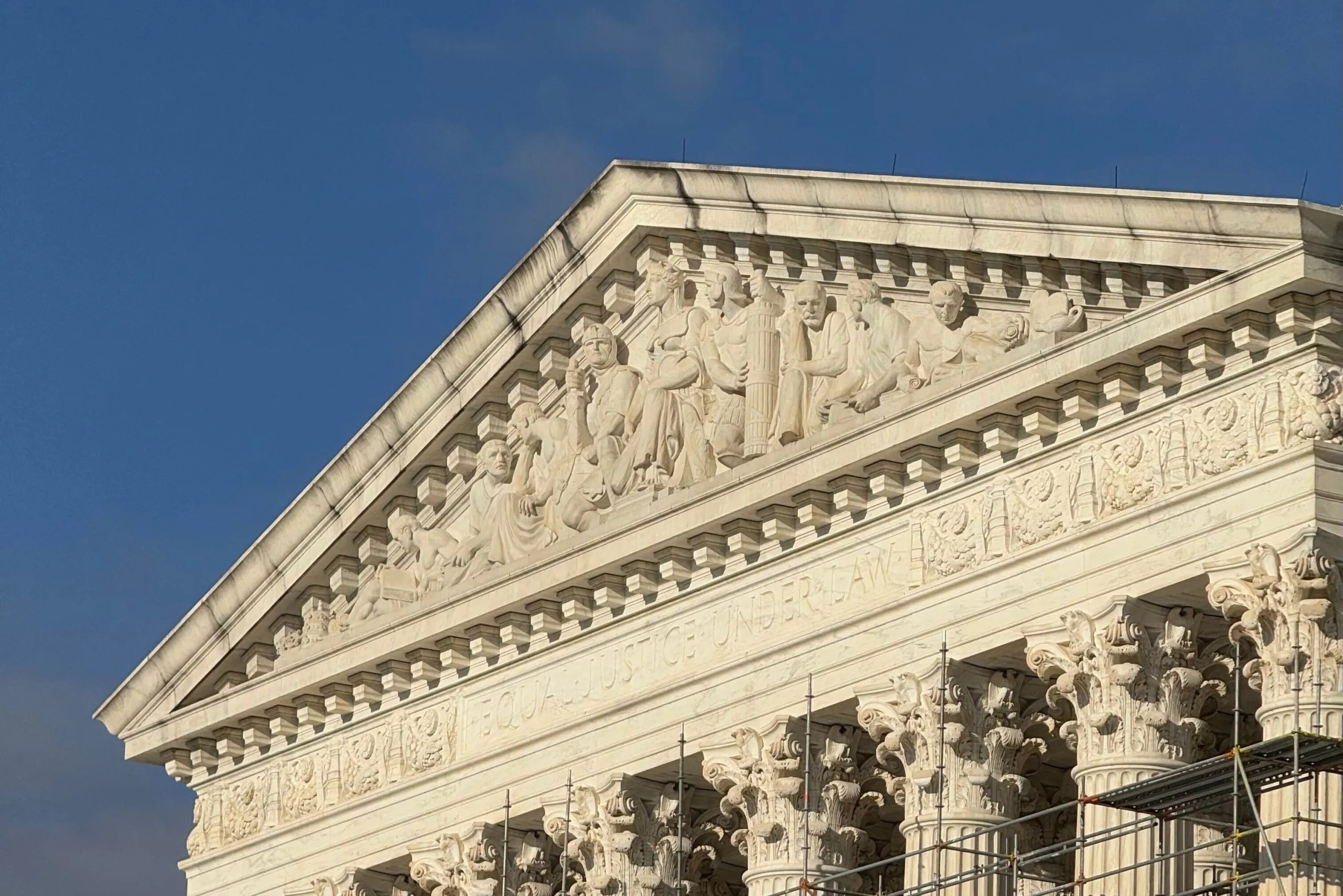
Hat tip to The Hill for noticing that Justice Neil Gorsuch is apparently a jokester not just during oral arguments, but also in written opinions. In his dissent in Bowe v. United States, Gorsuch described Loper Bright Enterprises v. Raimondo, a major case in which the court overturned the Chevron doctrine, as an “obscure administrative law case.” SCOTUS humor, I know…
Latest Opinions
Wednesday morning, the court released its opinions in three argued cases: Bost v. Illinois State Board of Elections, Case v. Montana, and Barrett v. United States.
- In Bost, the court held that, as a candidate for office, Congressman Michael Bost has standing to challenge Illinois’ rules for counting mail-in ballots received after Election Day.
- In Case, the court held that police officers in Montana did not violate the Fourth Amendment when they entered a home without a warrant and without “probable cause” because they reasonably believed that someone in the house needed emergency assistance.
- In Barrett, the court held that defendants who violate two separate provisions of the Armed Career Criminal Act cannot be convicted under both for the same crime.
SCOTUS Quick Hits
- The court has not yet indicated when it will next release opinions.
- Also on Wednesday, the justices heard argument in Galette v. New Jersey Transit Corporation, on whether New Jersey Transit Corporation is an “arm of the state” that can invoke sovereign immunity to prevent suits against it in other states. For more on the argument, see the On Site section below.
- Tomorrow, the justices will take part in a private conference to discuss cases and vote on petitions for review. We may know as soon as that afternoon if the court has added any new cases to the oral argument docket.
- On Wednesday, Jan. 21, we will be live blogging as the court hears oral argument in Trump v. Cook, on President Donald Trump’s effort to remove Lisa Cook as a member of the Federal Reserve Board of Governors.
Morning Reads
- Parents Ask Supreme Court to Restore Ruling on Gender Disclosure (Mark Walsh, Education Week) — A group of California parents has asked the Supreme Court to intervene after the U.S. Court of Appeals for the 9th Circuit blocked “a federal district court decision that said parents have a federal constitutional right to be informed by schools of any gender nonconformity and social transition by their children,” according to Education Week. The 9th Circuit panel said that the district court’s decision was “too ‘sweeping’ and ‘ambiguous’ and likely wrong on the merits,” and the panel “reinstated a mandate by the California Department of Education that restrains teachers and district staff members from informing parents about a child’s gender identity at school, unless the child consents.”
- Louisiana Indicts Another Out-of-State Doctor Over Abortion Pills (Emily Cochrane and Pam Belluck, The New York Times)(Paywall) — As part of their broader push to limit abortion in the state, “Louisiana officials on Tuesday moved to extradite a California doctor the state indicted on a charge of providing abortion pills to a Louisiana resident,” according to The New York Times. Cases like these over abortion pill prescriptions are part of a new wave of legal battles over abortion that emerged after “the U.S. Supreme Court eliminated the national right to abortion in 2022.” Legal experts expect that the court may soon need to address “whether states are required to honor one another’s abortion laws.”
- ‘When did I do that?’ Trump says about $2,000 tariff dividend checks (Mike Snider, USA Today) — During a recent interview with The New York Times, President Donald Trump appeared surprised to be asked about his previous comments on sending $2,000 tariff dividend checks to American families, according to USA Today. Since July, Trump has repeatedly pitched sending such checks out by mid-2026, but he now says his administration would need more time than that. “I’ll be able to do $2,000 sometime. I would say toward the end of the year,” the president said. According to the interview transcript, Trump also said that he plans to impose new tariffs through “some other alternative” if the Supreme Court strikes down the current tariffs.
- No, ICE Agents Do Not Have ‘Absolute Immunity’ From State Prosecution (Damon Root, Reason) — In a column for Reason, Damon Root responded to Vice President J.D. Vance’s recent claim that “the Immigration and Customs Enforcement (ICE) officer who shot and killed Renee Nicole Good in Minneapolis cannot be prosecuted for it by Minnesota officials” because, as a federal law enforcement officer engaged in federal action, he is protected by “absolute immunity.” According to Root, “the precedent is not actually so simple.” In a 1906 case called Drury v. Lewis, the court rejected “a Vance-like argument that called for shielding” officers “from any and all state prosecution,” holding that courts can review disputes “over lawful versus unlawful use of force.”
- How the Supreme Court May Untangle the Tariff Knot (Dan McLaughlin, National Review)(Paywall) — In a column for the National Review, Dan McLaughlin offered some predictions about the court’s highly anticipated ruling in the tariffs case. He expects the justices to strike down the tariffs but believes “it’s very possible that the Court fractures along multiple lines in saying no.” He also think it’s “unlikely … that the Court will foreclose all future avenues for other Trump assertion of tariff powers, or that it will do much to address how unjustly paid tariffs can be recouped.”
A Closer Look: FBI v. Fazaga
Careful court watchers may recognize the case name FBI v. Fazaga. The justices heard a dispute by that name just over four years ago, which concerned the FBI and three Muslim men who lived and worshipped in Orange County, California.
The men had sued the FBI, alleging religious discrimination and other rights violations, after discovering that agents had paid an informant to gather information on them and their fellow worshippers as part of a counterterrorism operation. The federal government invoked its state-secrets privilege and moved to have the men’s religion claims dismissed, contending that allowing them to go forward would jeopardize national security.
When the Supreme Court got involved during the 2021-22 term, it was to address whether the state-secrets privilege can be trumped by a provision of the Foreign Intelligence Surveillance Act that outlines a way for a district court to review sensitive surveillance information behind closed doors in order to assess the legality of electronic surveillance conducted under FISA without jeopardizing national security. The justices unanimously held that the provision does not displace the privilege and sent the case back to the U.S. Court of Appeals for the 9th Circuit for further proceedings.
After four years, those further proceedings have resulted in an unworkable outcome for the federal government, according to U.S. Solicitor General D. John Sauer, who on Oct. 8 filed a petition for certiorari asking the Supreme Court to reenter the dispute. While the 9th Circuit “determined that the government appropriately invoked the state-secrets privilege,” it went on to adopt “improper and wholly novel procedural requirements that essentially negate the privilege in myriad cases,” Sauer contended.
Specifically, Sauer stated that the 9th Circuit’s new ruling in FBI v. Fazaga requires district courts to review privileged information in order to evaluate the government’s claim to the state-secrets privilege. Such a requirement essentially recreates the situation the federal government previously fought to avoid, Sauer wrote, transplanting the review procedures outlined in FISA to the “state-secrets doctrine itself.”
“That decision,” Sauer continued, “threatens significant and recurring national-security harm.” He urged the justices to either grant the new petition for review and hear arguments on how courts should respond to invocation of the state-secrets privilege or vacate the 9th Circuit’s ruling and remand the case to the district court, where it may be dismissed for other reasons (namely, because the former FBI informant who provided the information about surveillance activities that fueled the Muslim men’s lawsuit has now recanted his story).
In response, the challengers have asked the court to leave the 9th Circuit’s ruling in place, contending, as they have at previous points in the case, that the government’s invocation of the state-secrets privilege is preventing them from making a case that they’re willing to make with the “ample” amount of “non-privileged information” that is now available about the challenged surveillance program. It is appropriate, the men added, for the district court to review the privileged information that the government is trying to protect in order to assess the government’s assertion that it cannot mount a defense without jeopardizing national security.
The court considered the petition in FBI v. Fazaga for the first time during the Jan. 9 conference. It is scheduled to be considered again at tomorrow’s conference.
SCOTUS Quote
“‘Courts sometimes make standing law more complicated than it needs to be.’ Thole v. U.S. Bank N.A., 590 U.S. 538, 547 (2020). We decline respondents’ invitation to do so here.”
— Chief Justice John Roberts, Bost v. Illinois State Board of Elections
On Site
Opinion Analysis
Court finds police properly entered man’s home despite absence of a warrant
The Supreme Court on Wednesday ruled that police officers in Anaconda, Montana, did not violate the Fourth Amendment when they entered a man’s home without a warrant, rejecting the man’s contention that officers needed “probable cause” to enter. It was enough, Justice Elena Kagan wrote for a unanimous court, that officers believed the man needed emergency assistance.

Argument Analysis
Justices wrestle with what, exactly, New Jersey Transit is
The Supreme Court on Wednesday debated whether New Jersey’s public transit agency can be sued in state courts in New York and Pennsylvania. The New Jersey Transit Corporation argues that it is an “arm” of the state and, therefore, immune from lawsuits elsewhere, but after a little over an hour of arguments, it was not clear whether a majority of justices agreed.

Contributor Corner
Presidential rhetoric and Supreme Court nominees
In his latest Empirical SCOTUS column, Adam Feldman discussed how Presidents Barack Obama, Joe Biden, and Donald Trump described Supreme Court justices and potential nominees during their campaigns and in official speeches, reflecting on what these comments told us about their visions for the court.

Posted in Featured, Newsletters