SCOTUStoday for Tuesday, December 23

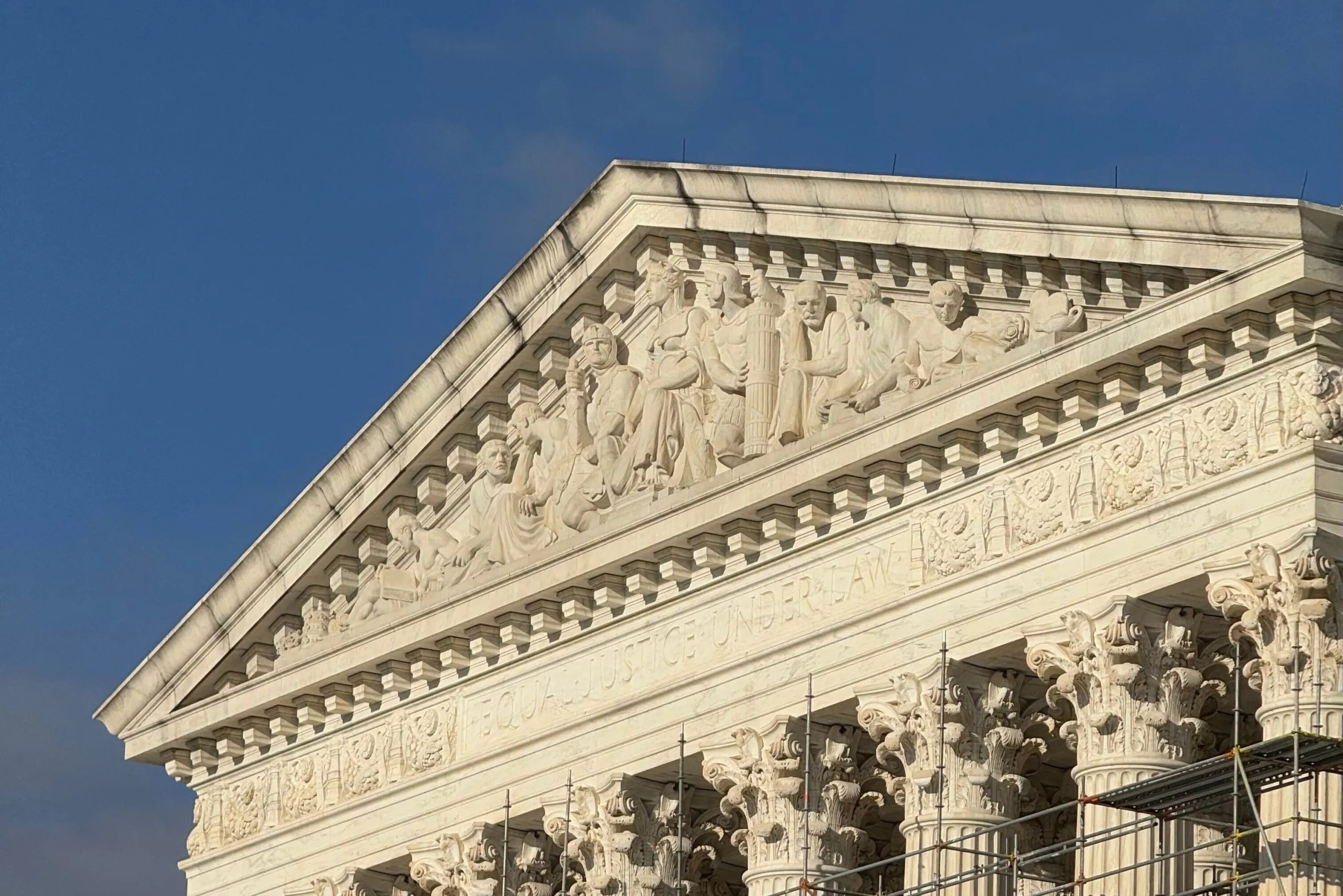
The first time a Christmas tree was placed in the Great Hall of the Supreme Court Building was 60 years ago, in 1965. “The Court has continued this holiday tradition ever since, with decorations added by Court employees. This year’s tree is a 30-foot-tall Concolor Fir from Swanton, Maryland,” according to the Supreme Court’s website.
A reminder: This is an abridged edition of SCOTUStoday, and we will also be sending an abridged edition tomorrow. Given the holidays, we will not be sending SCOTUStoday on Thursday or Friday. We’ll then do the same (three abridged editions, two days off) from Monday, Dec. 29 – Friday, Jan. 2. We will resume our regularly scheduled programming on Monday, Jan. 5.
SCOTUS Quick Hits
- The court could issue a decision in the interim docket case on President Donald Trump’s effort to deploy the National Guard to Illinois at any time.
Morning Reads
- Hassett Says Supreme Court Risks Creating Tariff Refund Problem (Jennifer A Dlouhy, Bloomberg)(Paywall) — On Sunday, Kevin Hassett, director of the National Economic Council, told CBS’s “Face the Nation” that he does not expect the Supreme Court to order refunds even if it strikes down a significant portion of President Donald Trump’s tariffs, according to Bloomberg. It would be “pretty unlikely that they’re going to call for widespread refunds because it would be an administrative problem to get those refunds out there” he said.
- As Supreme Court pulls back on gerrymandering, state courts may decide fate of maps (Jonathan Shorman, Stateline) — Critics of the Supreme Court’s decision from earlier this month allowing Texas to use its new congressional map in upcoming elections “have said it effectively forecloses federal challenges to this year’s gerrymanders,” according to Stateline. If that’s true, state courts will take center stage in the redistricting push occurring right now in states across the country. “Basically, every one of the 50 states has something in its constitution that could be used to constrain partisan gerrymandering,” said Samuel Wang, director of the Princeton Gerrymandering Project, to Stateline.
- A Conspicuous Gap May Undermine Trump’s Birthright Citizenship Plan (Adam Liptak, The New York Times)(Paywall) — In the birthright citizenship case that the court will hear this spring, the Trump administration “has urged the justices to restore ‘the original meaning’ of the 14th Amendment” and deny automatic citizenship to the “children of temporary visitors and illegal aliens,” according to The New York Times. But a new study contends that the administration’s claims about the original meaning of the amendment must be wrong, since it would mean that some members of Congress around the time the amendment was ratified should not have been considered citizens. “If there had been an original understanding that tracked the Trump administration’s executive order,” said Amanda Frost, a law professor and an author of the study, to The New York Times, “at least some of these people would have been challenged.”
- Mentions of Justice Scalia Surge at Conservative-Dominated Court (Jordan Fischer and Justin Wise, Bloomberg Law) — Former Supreme Court Justice Antonin Scalia loomed large in this fall’s oral argument sessions, according to Bloomberg Law. “Justices and advocates have invoked Scalia’s name nearly three dozen times just since the current term began in October. That’s already on par with the number of references he’s received in most calendar years since he died in 2016.” Bloomberg Law’s analysis showed that Scalia is sometimes used to make opposing arguments in the same case and that, among current justices, Justice Brett Kavanaugh references him the most.
- Samuel Alito Says Supreme Court Responding to Trump Acting ‘Aggressively’ (Jenna Sundel, Newsweek) — In an interview over the weekend with an Italian news outlet, Corriere della Serra, Justice Samuel Alito reflected on recent shifts involving congressional authority and executive power. “What has happened over the course of the 20th century is that Congress has delegated its authority to the executive branch,” Alito said, according to Newsweek. “And right now, because of the polarization in the country, it’s almost impossible to get things through Congress. So as a result, the executive agencies make most of the law. If you look at the end of any year, and if you just stacked up all the regulations that they’ve issued and compare that to laws Congress has passed, the regulations are many, many times bigger.” He added, “What we have seen increasingly over the last 10 years is an inclination by presidents to try to do more and more and more, using their own power, or what they believe to be their own power. … And now, under President Trump, it’s just gone on like this, and he’s used his executive power very aggressively.”
On Site
Contributor Corner
A way out remains for birthright citizenship decision
In his latest Immigration Matters column, César Cuauhtémoc García Hernández reflected on whether the court will deal head-on with the constitutionality of President Donald Trump's birthright citizenship order or, instead, rule on "a technical procedural issue."

Redistricting cases head for rock bottom
In his latest Justice, Democracy, and Law column, Edward Foley revisited a 2019 case in which the court held that addressing partisan gerrymandering is beyond the reach of federal courts and described other cases that have made racial gerrymandering more difficult to address.

Posted in Featured, Newsletters