
Skip to content
Newsletter

SCOTUStoday for Thursday, March 12

Kelsey Dallas's Headshot
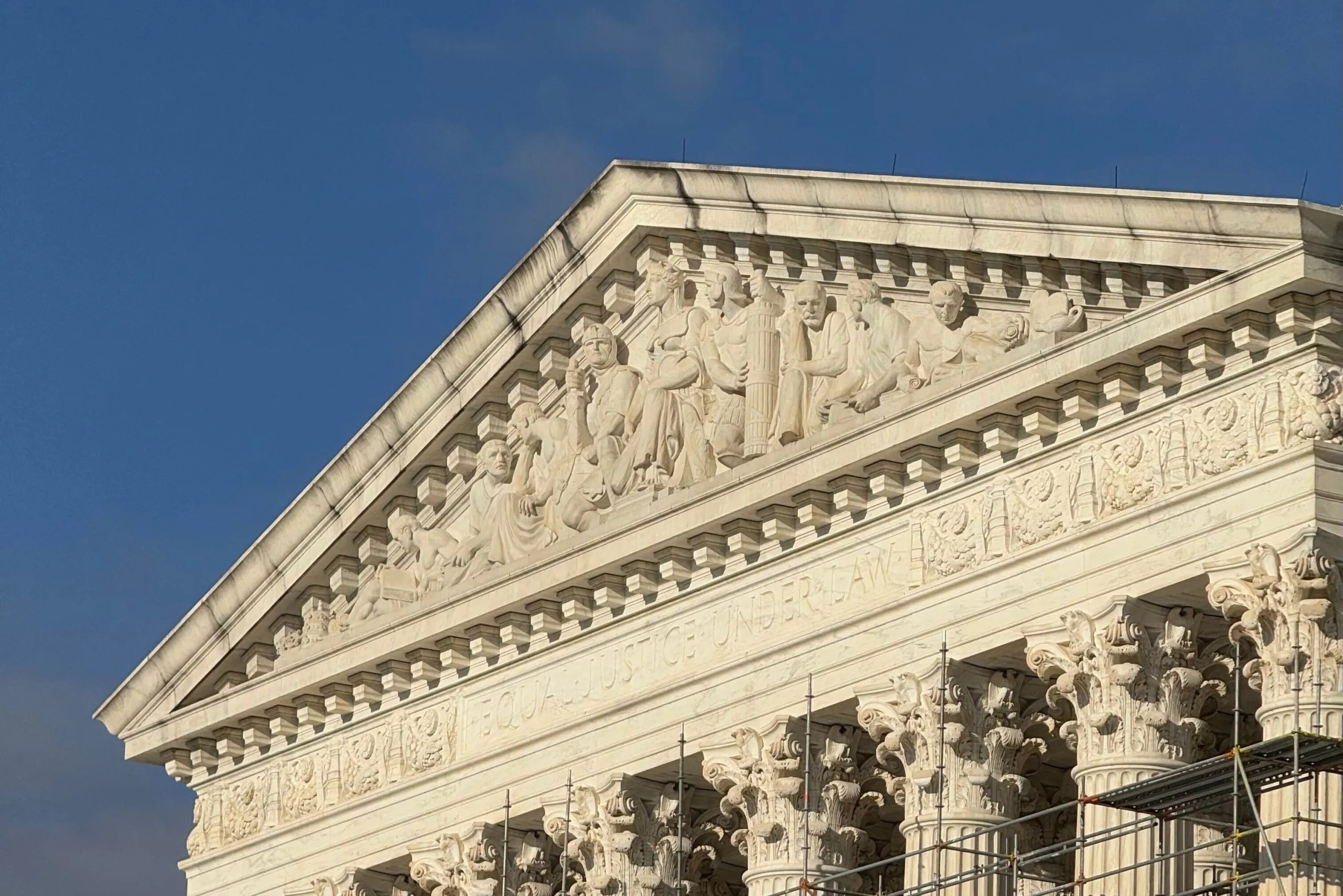
Carved details along top of Supreme Court building are pictured
(Katie Barlow)

On this day in 1804, the House of Representatives voted to impeach Justice Samuel Chase, who had been accused of abusing his power by refusing to dismiss biased jurors and inappropriately limiting evidence in politically contentious cases. Chase was later acquitted by the Senate. Chase remains the only justice to have been impeached, as we noted in our Closer Look about him in December.

At the Court

On Wednesday, the Trump administration asked the court on its interim relief docket to allow it to remove protected status from Haitian nationals. For more on the case, see the On Site section below.

The interim docket case on the Trump administration’s effort to remove protected status from Syrian nationals is now fully briefed, and the court’s decision could come at any time.

Also on Wednesday, the court denied a request for a stay of execution from Cedric Ricks, who was sentenced to death after being convicted of killing his girlfriend and her 8-year-old son. Ricks was executed in Texas hours after the justices announced their decision.

The court will next hear arguments on Monday, March 23, the first day of its March sitting.

Morning Reads

U.S. Accuses 16 Trading Partners of Unfair Practices and Opens Investigation

Ana Swanson and Tyler Pager, The New York Times

On Wednesday, the Trump administration “announced a new trade investigation into unfair trading practices by 16 of America’s largest trading partners, as it works to resurrect a system of tariffs recently struck down by the Supreme Court,” according to The New York Times. The investigation “will be carried out under Section 301 of the Trade Act of 1974, a law that allows the United States to impose tariffs in response to unfair trade practices,” and will specifically explore “what the administration called ‘excess capacity’ in the factory sectors of foreign countries, which it said had resulted in overproduction and large and persistent U.S. trade deficits with those nations.” After the investigation, the administration must also “hold consultations and hearings before it can impose those import taxes” under Section 301.

Poll: Confidence in the Supreme Court drops to a record low

Lawrence Hurley, NBC News

New research from NBC News shows that “[t]he percentage of voters with significant levels of confidence in the Supreme Court has dropped to its lowest point since NBC News began polling on the question in 2000.” Today, 22% of registered voters have a “great deal” or “quite a bit” of confidence in the court. “The previous low point for voters’ impressions of the Supreme Court came in the wake of the ruling that overturned Roe v. Wade in 2022, when 27% said they had a great deal or quite a bit of confidence.” The poll showed that, “[a]lthough Republicans generally have higher confidence in the court than Democrats do, there has been a drop among both constituencies over time.”

Senators probe birthright citizenship as Supreme Court gears up to tackle Trump executive order

Benjamin S. Weiss, Courthouse News Service

As the Supreme Court prepares for oral argument on April 1 on President Donald Trump’s executive order on birthright citizenship, Senate Republicans are throwing their support behind the administration. “Republicans on the Senate Judiciary Committee argued Tuesday that granting citizen status to children born in the U.S. to parents who are here illegally or who participated in birth tourism was a ‘dramatic departure’ from how other countries understand citizenship,” according to Courthouse News Service. “Republican lawmakers and witnesses also claimed foreign countries, particularly China, were exploiting the current interpretation of birthright citizenship rights in what they called a ‘profound’ national security risk.”

US judiciary approves new public defender office focused on US Supreme Court advocacy

Nate Raymond, Reuters

On Tuesday, the U.S. Judicial Conference, which sets policies for the federal judiciary, “approved a new office focused on improving the quality of representation of indigent criminal defendants at the U.S. Supreme Court, with the goal of creating a counterweight to the U.S. Solicitor General’s Office,” according to Reuters. The new office, called the Supreme Court Advocacy Project, “will be staffed with lawyers fully capable of handling cases before the Supreme Court, though [Geremy] Kamens [the federal public defender for the Eastern District of Virginia] said it would be up to individual public defender offices to decide whether to ask the office’s attorneys to join a case.”

Trump DOJ quietly restores felons' gun rights, AZ lawmaker included

Nick Penzenstadler, USA Today

The Trump administration recently “restored the gun rights [of] 22 people who had lost them because of felonies, indictments or other convictions,” as it worked to revive “a relief procedure that’s been dormant since 1992 to make it easier for nonviolent felons to get their gun rights back,” according to USA Today. The administration is expected to soon launch an online portal allowing people who are currently prohibited from possessing guns to request a restoration of their gun rights. The Department of Justice has said such a system became necessary after the Supreme Court struck down a New York gun-control law in 2022, because the ruling “led to more challenges to laws that prohibit felons from owning guns.”

On Site

Interim Docket

Trump administration urges Supreme Court to allow it to revoke protected status for Haitian nationals

The Trump administration on Wednesday asked the Supreme Court to pause a ruling by a federal judge in Washington, D.C., that barred the government from ending a program that allows Haitians to remain in the United States temporarily. U.S. Solicitor General D. John Sauer also asked the justices to take up the merits of the case, as well as a similar one already before them involving Syria, without waiting for a federal appeals court to weigh in.

Supreme Court is showing in Washington, D.C.
From the SCOTUSblog Team

The First Amendment’s application to public university students: an explainer

Free speech on university campuses is a perennially hot topic, made even more so by recent protests about the Israeli-Palestinian conflict. So how does the First Amendment apply to students in the context of public universities? Here’s an explainer.

The,United,States,Supreme,Court,Is,Seen,In,Washington,,Dc,
Contributor Corner

Abandoning the separation of powers in times of war

In his Courtly Observations column, Erwin Chemerinsky reflected on legal questions surrounding the war in Iran and the broader debate over enforcing checks and balances in the context of war powers.

The statue, Authority of Law, by American sculptor James Earle Fraser outside the Supreme Court of the United States. The High Court building was built during the Great Depression and completed in 1935. Architect Cass Gilbert's design is based on a Greco-Roman temple.
Outside Opinions

The 14th Amendment’s citizenship clause does not codify English principles of subjectship

In a column for SCOTUSblog, Pete Patterson explored the Trump administration’s effort to prevent “children born to individuals lawfully but transiently present in the United States” from accessing birthright citizenship, contending that the 14th Amendment supports this position.

The US Supreme Court building

Podcasts

Divided Argument

A Subversive Mission

Will Baude and Dan Epps announce their new partnership with SCOTUSblog and explore Galette v. New Jersey Transit Corporation, a sovereign immunity decision in which the court may, or may not, have paid attention to Will’s amicus brief.

Amarica’s Constitution

Substantive Expansion – with Advisory Opinions and Divided Argument

Akhil Reed Amar and Andy Lipka continue their analysis of birthright citizenship and talk about their new partnership with Advisory Opinions and Divided Argument.

SCOTUS Quote

“The First Amendment is often inconvenient. But that is beside the point. Inconvenience does not absolve the government of its obligation to tolerate speech.”

— Justice Anthony Kennedy in International Society for Krishna Consciousness v. Lee (1992)

Recommended Citation: Kelsey Dallas, SCOTUStoday for Thursday, March 12, SCOTUSblog (Mar. 12, 2026, 9:00 AM), https://www.scotusblog.com/2026/03/scotustoday-for-thursday-march-12/