

William Howard Taft, a man of many superlatives. The first president to use a car for official transport, the last president to keep a cow on the White House lawn, and of course, the only person to serve as both a justice and president (though others gave it a try). Between the last two points (the 1,500-pound Pauline Wayne enraptured the White House press corps, some of whom covered the cow “like a tabloid would a Kardashian”), we have almost too much to talk about.
The 10th chief justice was born in Cincinnati in 1857 and was the son of a former secretary of war and attorney general under President Ulysses S. Grant. Like his father, Taft graduated from Yale, coming second in his class before studying law at the University of Cincinnati. After he graduated in 1880 (and after having campaigned for several Republican candidates in that year’s election), Taft started in private practice in Cincinnati, then briefly served as an assistant prosecuting attorney. In 1887, Ohio’s governor named Taft to be a judge on the Ohio Superior Court, and, in 1888, he won a five-year term.
Although Taft’s name came up for the Supreme Court even back then, President Benjamin Harrison instead appointed him solicitor general. (Taft was quite successful in that role, winning 15 of the 18 cases he argued in front of the Supreme Court.) Taft was then named to the U.S. Court of Appeals for the 6th Circuit, where he served from 1892 until 1900. Under President Theodore Roosevelt, he was twice offered the job of a justice on the Supreme Court but twice declined – one of those times due to the post he assumed in 1901 as Civilian Governor of the Philippines.
In 1904, Taft agreed to become Roosevelt’s secretary of war, and in 1908 defeated the Democratic candidate, William Jennings Bryan, to become president. Taft served one term, in which the public saw him as a “large, genial” fellow. (At one point Taft reached 332 pounds, which was not helped by his typical 12-ounce steak breakfast – though the popular bathtub myth is false.)
Since we’re not here to learn about Taft’s presidency, we’ll treat it as he did. Before and after serving as chief executive, Taft expressed that his chief (pun intended) goal was to serve on the Supreme Court. Indeed, he wrote his brother in 1905 that, “My ambition is to become a justice of the Supreme Court. I presume, however, there are very few men who would refuse to accept the nomination of the Republican party for the presidency, and I am not an exception.” And after being on the court for a few years, he remarked, “I don’t remember that I ever was President.”
To be fair, Taft’s wife, Helen “Nellie” Herron, had a different perspective. Nellie much preferred the role of “first lady of the country” as opposed to “first lady of the court” and was apparently instrumental in pushing Taft to initially accept the Philippines commission and run for president. (Nellie, among her other accomplishments, established equal treatment of White House staff and planted the first cherry tree at D.C.’s Tidal Basin.)
Taft didn’t campaign in the 1912 election given the tradition that incumbent presidents not do so, and after his defeat, he became a constitutional law professor at Yale. Between 1916 and 1919, Taft also joined the League to Enforce Peace, which pushed for a League of Nations, and acted as joint chairman of the War Labor Board from 1918 to 1919.
After Republican President Warren Harding won the 1920 election, Taft had another chance to serve on the Supreme Court – which he enthusiastically took in June 1921 when Harding nominated him to the chief justiceship. The Senate confirmed Taft’s appointment that same day.
Taft’s most recognized legal contributions to the court include rulings restricting Congress’ power, such as through Bailey v. Drexel Furniture Co. in 1922, which voided a federal law taxing products made with child labor. In the same year, Taft ruled in Stafford v. Wallace that the federal government can regulate certain activities to prevent unfair competition through the commerce clause. And then there is his 1926 decision in Myers v. United States, which supported the president’s power to remove “administrative officers” – an issue at the heart of several cases this very term.
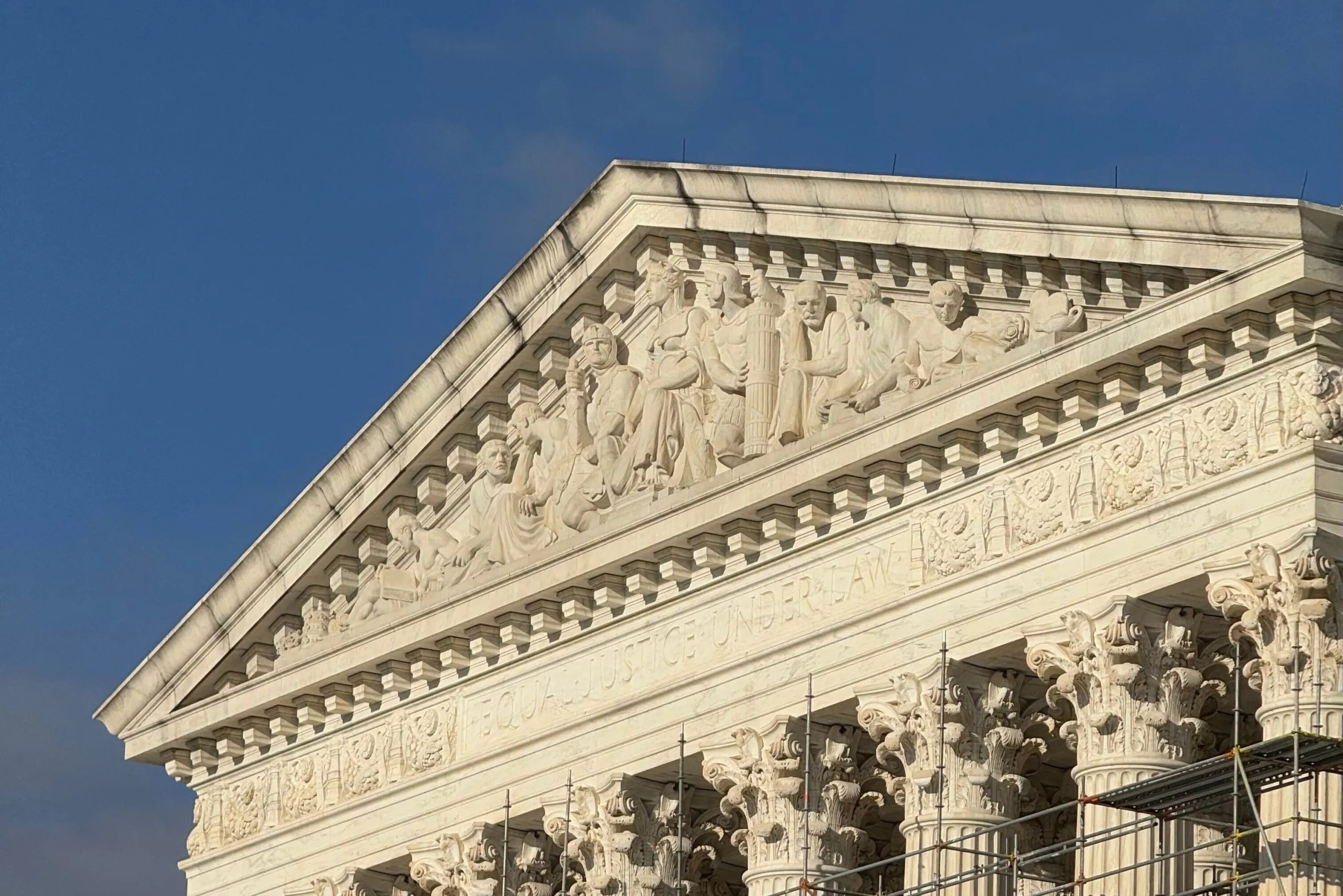
But perhaps Taft’s greatest impact as chief justice was in the realm of judicial administration, which has earned him the designation as “father of the modern U.S. Supreme Court.” Among other things, Taft established the court’s practice of controlling its own caseload, reorganized the structure of the lower courts, and oversaw the construction of the Supreme Court Building – telling architects to create something “of dignity and importance” (recall that before this, the court was confined to a small space in the U.S. Capitol).
“[T]here have been two chief justices who really deeply cared about judicial administration,” said Justice Sandra Day O’Connor in 1997 when giving an introduction for the Supreme Court Historical Society’s lecture series on the chief justices of the 19th and 20th centuries. “One was Chief Justice Warren Burger … and the other was William Howard Taft.”
O’Connor continued, “Taft was first and foremost a judge. He served as president for one term, it’s true. But what he really loved was being a judge. He cared about how the courts function, how this court functioned. He worked with Congress to get more discretion for this court in deciding what cases to take. He did so much that helped improve the system.”
Taft retired from the court in 1930 due to health problems, and died a month later at age 72 from heart disease. He was both the first president and the first justice to be interred at Arlington National Cemetery, and remains the only justice to have a state funeral.