Justices will hear argument on Trump administration’s removal of protected status for Syrian and Haitian nationals

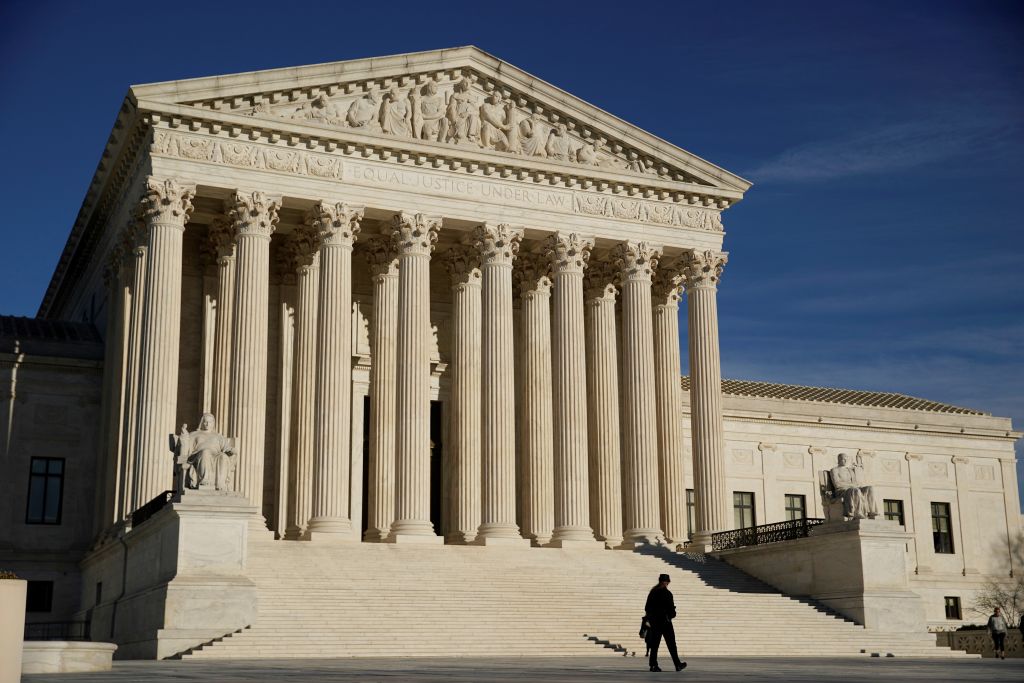
The Supreme Court announced on Monday afternoon that it will hear oral argument on whether the Trump administration can end a program that allows several thousand Syrians and approximately 350,000 Haitians to live in the United States temporarily. In a brief, unsigned order, the justices left in place rulings by federal judges in New York and Washington, D.C., that had indefinitely postponed the termination of the program, known as the Temporary Protected Status program, for Syrian and Haitian nationals. But the justices granted a pair of requests from the Trump administration to weigh in on the merits of the dispute over the administration’s efforts to end the TPS program for those nationals without waiting for federal appeals courts to do so first, as is the normal procedure.
The court will hear oral arguments in Noem v. Doe, the challenge to the termination of the TPS program for Syrian nationals, and Trump v. Miot, the challenge to the termination of the program for Haitian nationals, during the second week of its April argument session, which runs from April 27 through April 29. A decision in the two cases, which will be combined and treated as one for purposes of oral argument and the court’s eventual ruling, is likely to follow by late June or early July.
Congress enacted the Temporary Protected Status program in 1990. The program gives the Department of Homeland Security the power to designate a country’s citizens as eligible to remain in the U.S. and work if they cannot return to their own country because of a natural disaster, armed conflict, or other “extraordinary and temporary” conditions there.
In the wake of a “brutal crackdown” by Syrian dictator Bashar al-Assad against anti-government dissenters, which led to the deaths of thousands of Syrians, Janet Napolitano – then the Secretary of Homeland Security – designated Syria under the TPS program. The program was repeatedly renewed for Syria over the next 13 years. A relatively small number of people – estimated at several thousand – are currently protected by the program.
Al-Assad’s regime was overthrown in 2024, and he fled to Russia. Last fall, then-DHS Secretary Kristi Noem announced that the Trump administration planned to end Syria’s TPS designation, effective Nov. 21, 2025. She indicated that Syria’s new government was attempting to “move the country to a stable institutional governance,” and she said that it would be “contrary to the national interest” if the TPS designation for Syria remained in place.
A group of Syrians in the United States who had benefited from the TPS program went to federal court in New York to challenge the Trump administration’s attempt to end the designation of Syria. Shortly before the termination of the TPS designation was slated to go into effect, U.S. District Judge Katherine Polk Failla blocked the government from ending the program for Syria. Failla concluded that the challengers were likely to succeed on their claim that the decision to end the TPS designation for Syria violates the federal law governing administrative agencies. She noted that Noem had tried to end TPS not only for Syrians, but also “for virtually every country that has come up for consideration” – which, she wrote, in light of the different conditions and factors leading to the initial designations, suggested that the decisions to terminate TPS were not appropriate.
The Trump administration asked the U.S. Court of Appeals for the 2nd Circuit to freeze Failla’s order while it appealed, but it declined to do so.
U.S. Solicitor General D. John Sauer then came to the Supreme Court on Feb. 26, asking the justices to pause Failla’s order and allow the Trump administration to terminate TPS for Syrians while its appeal moves forward. Sauer pointed to a pair of earlier rulings on the court’s interim docket in which the court had paused lower-court rulings barring the government from ending TPS for Venezuelans, calling Failla’s order “a materially similar order with materially similar flaws.” Sauer also suggested that courts do not have the power to review Noem’s decision to end TPS for Syrians at all.
Sauer further asked the justices to take up the dispute and hear oral argument now, without waiting for the 2nd Circuit to weigh in first. This relatively rare maneuver, known as “certiorari before judgment,” is necessary, Sauer wrote, because of “the lower courts’ persistent disregard for this Court’s stay orders.”
The Syrian plaintiffs countered that the government had not shown that it would suffer any harm if Failla’s order remains in effect for now – a key factor in determining whether the government is entitled to the relief that it seeks. Moreover, they added, their case is different from the Venezuelan cases in which the justices did allow the government to move ahead with terminating TPS. Among other things, they noted, several hundred thousand Venezuelans benefited from the TPS program, prompting the government to claim that it suffered “‘acute’ harm” from the additional drain that those beneficiaries placed on government services.
And if the government is allowed to go ahead and terminate the Syrian TPS program while its appeal continues, the plaintiffs countered, they will suffer “imminent and concrete harms.” They pointed to the “Do Not Travel” advisory concerning Syria issued by the State Department even before the military conflict in Iran began at the end of February, creating the prospect of “a full-scale regional war.”
Napolitano designated Haiti under the TPS program in 2010 in the wake of a devastating earthquake that caused hundreds of thousands of deaths. Noem announced in November 2025 that the government intended to terminate Haiti’s TPS designation, effective Feb. 3, 2026, based on her determination that “there are no extraordinary and temporary conditions in Haiti that prevent Haitian nationals … from returning in safety.” Moreover, Noem said, “it is contrary to the national interest of the United States to permit Haitian nationals … to remain temporarily in the United States.”
Several Haitian nationals with TPS challenged Noem’s efforts to end the program in federal court in Washington, D.C. U.S. District Judge Ana Reyes issued an order in early February that barred the government from ending the program for Haitians. Reyes concluded that it was “substantially likely” that Noem had ended the Haitian TPS designation “because of hostility to nonwhite immigrants.” The termination also violated the federal law governing administrative agencies, Reyes concluded, because Noem had failed both to consult with other federal agencies before ending Haiti’s TPS designation and to consider “the billions Haitian TPS holders contribute to the economy.”
The U.S. Court of Appeals for the District of Columbia Circuit declined to pause Reyes’ ruling. The majority acknowledged the Supreme Court’s orders freezing similar rulings involving TPS designations for Venezuela, but it contended that those cases were “‘meaningfully distinct’” because – unlike in this case – “the government had invoked ‘complex and ongoing negotiations with Venezuela’” as part of its argument for temporary relief.
The Trump administration came to the Supreme Court last week, asking the justices both to pause Reyes’ ruling and (as in the Syrian TPS case) grant review now. Sauer described the government’s efforts to end the Syrian and Haitian TPS designations as “‘the legal equivalent of fraternal, if not identical, twins’” to its effort to end Venezuela’s TPS program.
In a Monday filing, the Haitian nationals stressed that if Reyes’ order were temporarily paused, they could be permanently harmed, because the government could deport them to Haiti even while the litigation continues. Once there, they stressed, they would face dangerous conditions. Indeed, they noted, “the State Department advises that people ‘not travel to Haiti due to kidnapping, crime, terrorist activity, civil unrest, and limited health care.’”
On the other hand, they wrote, if Reyes’ order stays in place, the government will not suffer permanent harm. “Haitian TPS holders have lived in our midst for nearly two decades without problem,” they wrote. “There is no sudden emergency requiring their immediate expulsion.”
Just a few hours after the Haitian TPS holders submitted their response, and without waiting for the Trump administration to file a reply brief, the court issued a one-paragraph order setting the cases for one hour of oral argument “during the second week of the April 2026 argument session.” The briefs in the case will be highly expedited, with the government’s brief due in just two weeks and the challengers’ briefs due two weeks after that.
Posted in Court News, Emergency appeals and applications, Featured, Merits Cases
Cases: Noem v. Doe, Trump v. Miot