Does legislative history have a judicial future?

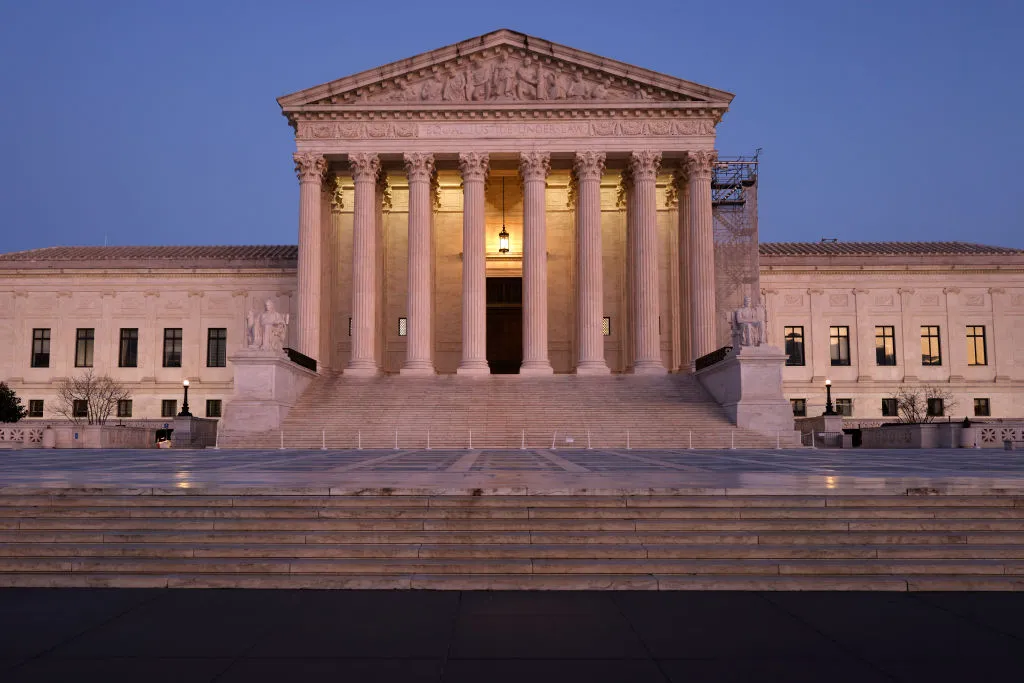
Major Questions is a recurring series by Adam White, which analyzes the court’s approach to administrative law, agencies, and the lower courts.
Does legislative history have a future in judicial opinions? For the first time in a long time, it seems so.
For decades, the rise of textualism was accompanied by the decline of judicial reliance on legislative history – Senate and House committee reports or floor debates – to augment interpretation of a law’s own words. Textualism was meant to constrain judicial discretion, and resorting to legislative history was too fraught with temptations for judicial creativity by allowing the judge to cherry-pick a choice quote or statement to support his or her predilections. “Judge Harold Leventhal used to describe the use of legislative history as the equivalent of entering a crowded cocktail party and looking over the heads of the guests for one’s friends,” wrote Justice Antonin Scalia in 1993.
So in an era where “we’re all textualists now,” as Justice Elena Kagan famously quipped in a 2015 talk at Harvard Law School, one might assume that debates over legislative history are in permanent decline. Indeed, even Kagan, in that same 2015 talk, added that “I’m not such a fan of legislative history myself, honestly.”
She also recalled her dissent in 2015’s Yates v. United States – the memorable case on whether fish are “tangible objects” under white-collar crime laws – where she mentioned legislative history only dismissively: “And legislative history, for those who care about it, puts extra icing on a cake already frosted.”
“I think that’s mostly what people’s treatment of legislative history is now at the court,” Kagan told the Harvard audience. “So this is one where I think, basically, we’re all doing the same thing and Justice Scalia just hasn’t said, by the way, I won.”
And that was more than a decade ago. If anything, legislative history has been even less relevant since then.
So when the court delivered nearly 170 pages of opinions last month in the big tariffs case, Learning Resources v. Trump, one would be forgiven for glossing over Justice Ketanji Brown Jackson’s brief five-page concurrence, in which she wrote separately (and alone) to declare that “the Court can, and should, consult a statute’s legislative history to determine what Congress actually intended the statute to do.”
Jackson’s concurrence is worth serious attention, and not just among non-textualists. The next few years might see an uptick in debates over the possible uses and misuses of legislative history thanks to another recent landmark decision, Loper Bright v. Raimondo, which put an end to Chevron deference – the doctrine that courts should defer to an executive agency’s interpretation of an ambiguous statute.
***
The judiciary’s turn away from legislative history happened in the era of Chevron deference, and I doubt that was a coincidence.
Before Chevron v. N.R.D.C. was decided in 1984, judges had to struggle to find a best interpretation of ambiguous statutes in esoteric regulatory disputes, and pre-textualist judges often turned to legislative reports and even floor debates for nominal evidence of Congress’ intentions or purposes. Justice Felix Frankfurter, for example, applauded 20th century judges’ embrace of legislative history, even while warning against its possible misuse.
Four decades later, when conservative judges and academics were articulating the new textualist jurisprudence that focused on the law’s “original public meaning” (instead of, say, the lawmakers’ “intent”), there were fascinating debates among leading conservative judges on how much weight, if any, judges should place on legislative history.
Scalia categorically opposed the use of legislative history. As early as 1985, when he was still serving on the U.S. Court of Appeals for the D.C. Circuit, Scalia used a concurrence in a technical FERC case to voice his criticism. “I think it time for courts to become concerned about the fact that routine deference to the detail of committee reports, and the predictable expansion in that detail which routine deference has produced, are converting a system of judicial construction into a system of committee-staff prescription,” he wrote. In other words, much to Scalia’s chagrin, courts were not interpreting the law as written but deferring to the views of hand-picked committee staffers.
But another leading textualist, 7th Circuit Judge Frank Easterbrook, wrote several times in the same era that his friend Scalia might be overstating the need to completely eschew legislative history. To be sure, judges too often “pawed through legislative history without much theory about what they were doing and why,” he wrote in 1991. And “snippets from the debates [on the floor of Congress] so often have been used in lieu of the text, or as an excuse to nudge the law closer to the view of the losers in the legislative battle” – “a class that may include the judge.”
Still, Easterbrook argued, “[n]o degree of skepticism concerning the value of legislative history allows us to escape its use,” because laws are ultimately the product of compromise, and legislative history can show “the extent of [such] agreement.” Easterbrook conceded many limits on the misuse of legislative history to expand the meaning of laws (in his 1991 article, and in other writings around the same time). But, as he noted a few years later, “I have no doubt that these are cautions rather than bars to the use of legislative history.”
Another leading judge of the era, the D.C. Circuit’s Laurence Silberman (who Justice Amy Coney Barrett clerked for, before her Scalia clerkship), joined the debate with an article of his own, suggesting that he, too, was at least one degree less wary of legislative history than his friend was. “Justice Scalia has forcefully argued that recourse to legislative history, which typically permits greater judicial foraging in a congressional forest to find desired supporting fauna and flora with which to create ambiguities, is the prime source of improper judicial creativity—but I am less sure of that.” He had found legislative history useful to understand a law’s meaning, if only rarely and cautiously.
It was a fascinating debate among great legal minds (and great friends). But as a practical matter, it was soon rendered moot by Chevron deference. In the Chevron era, disputes over ambiguous administrative laws would be settled not by resorting to the legislative history, but by deferring to the agency’s own interpretation of the law at issue. Thus, as the use of legislative history lost intellectual favor with the rise of textualism, it also lost practical favor in the age of Chevron.
***
Post-Chevron, might we see new debates over judicial use of legislative history? Judges can no longer use deference doctrines to escape the difficult search for specific meaning in vague, old statutes. They will apply canons of construction, of course. But lawyers will also point them to various pieces of legislative history – a committee print here, a floor debate there – and judges will have to decide what probative value, if any, the documents might have.
Learning Resources was the highest-profile example of this in the post-Chevron era. The case turned on the International Economic Emergency Powers Act of 1977. At oral argument, justices raised many questions about the law that preceded it – the Trading with the Enemy Act of 1917 – as well as President Richard Nixon’s and Gerald Ford’s actions under its predecessor statute, and how Congress might have taken that history into consideration when enacting IEEPA.
In the end, Chief Justice John Roberts’ opinion for the court rejected arguments that relied “extensively on a series of inferences drawn from scant legislative history.” The principal dissent, by Justice Brett Kavanaugh, put great weight on the real-world history preceding the 1977 Act, but it explicitly declined to rely on formal legislative history – e.g., the House Committee Report – as dispositive evidence of the law’s meaning. Justice Elena Kagan, in her concurrence, was more willing to cite legislative history as supporting the court’s interpretation of IEEPA, though only in a footnote.
But Jackson put the legislative history front and center, and she emphasized it as exemplifying the value of legislative history more broadly.
Citing modern scholarship on legislative history by the late Judge Robert Katzmann and Professors Abbe Gluck and Lisa Bressman, Jackson argued that legislative history was dispositive for interpreting the statute at issue. “[I]n contrast to the principal dissent’s rejection of Committee Reports as a means of ascertaining a statute’s meaning … I think these Senate and House Reports are among the best evidence of what Congress sought to accomplish with its enactments.”
To be fair, nearly all of the action took place over the so-called “major questions doctrine,” or the idea that Congress would not have delegated such sweeping tariff powers to the president without being explicit about it. In that regard, there was a striking (and sharp) disagreement between Justices Neil Gorsuch and Barrett over how to understand the basic nature of this principle, a disagreement that was first made evident in 2023’s Biden v. Nebraska. Even in cases where Barrett and Gorsuch and their colleagues ultimately arrive at the same outcome, and even where they all use variations of the same major questions doctrine, they see the fundamental importance of justifying their approaches from the ground up, in debates that highlight their largely theoretical disagreements.
In that respect, this new intra-textualist debate is a striking echo of the debates that conservative judges like Scalia, Easterbrook, and Silberman had in the late 1980s, over the basic principles and limits of textualism. Within a few years, those debates would be largely settled. But the debates needed to be had, first.
So, too, with legislative history. Jackson’s explicit focus on legislative history might force similar debates in major cases arising under ambiguous laws, especially now that courts cannot simply defer to administrative agencies’ interpretations of ambiguous statutes. Such debates might occur especially in the lower courts, and in cases involving old, ambiguous, esoteric laws.
When they do occur, textualists should be especially mindful of how Jackson framed the point in Learning Resources. In her concurrence’s closing lines, she invoked legislative history as a tool for judicial restraint: “Given that evidence [in the legislative history], we need not speculate or, worse, step into Congress’s shoes and formulate our own views about what powers would be best to delegate to the President for use during an emergency,” she wrote. “When Congress tells us why it has included certain language in a statute, the limited role of the courts in our democratic system of government—as interpreters, not lawmakers—demands that we give effect to the will of the people.”
Simply put, Jackson is taking textualists’ original main argument against legislative history – the need for judicial restraint – and using it against one of the basic tenants of modern textualism. Textualists should not simply shrug this off.
For what it’s worth, I agree with Scalia here. Maybe it’s possible for judges to use legislative history carefully, sparingly, and for the sake of self-restraint, as Easterbrook and Silberman suggested four decades ago. But thinking realistically, Scalia seems right: the actual benefit of using legislative history, in real cases, seems extremely low. When it comes to interpreting ambiguous laws, legislative history is virtually never dispositive, and it inspires much more judicial creativity than judicial restraint. Justice Kagan noted this, and various other problems with legislative history, in her “we’re all textualists now” talk. And as both Scalia and Kagan have reminded audiences, we must always keep in mind that Congress enacts laws, not legislative histories.
But Jackson might prove to be the court’s first post-textualist justice – that is, the first progressive justice whose jurisprudence is defined less by textualism or by what preceded it, than by the judicial and academic arguments that arose in response to textualism’s predominance. Her argument for legislative history proceeds along those lines, and it will deserve thoughtful responses in turn.
Posted in Featured, Major Questions, Recurring Columns
Cases: Loper Bright Enterprises v. Raimondo, Learning Resources, Inc. v. Trump (Tariffs)