Supreme Court allows California to use congressional map benefitting Democrats

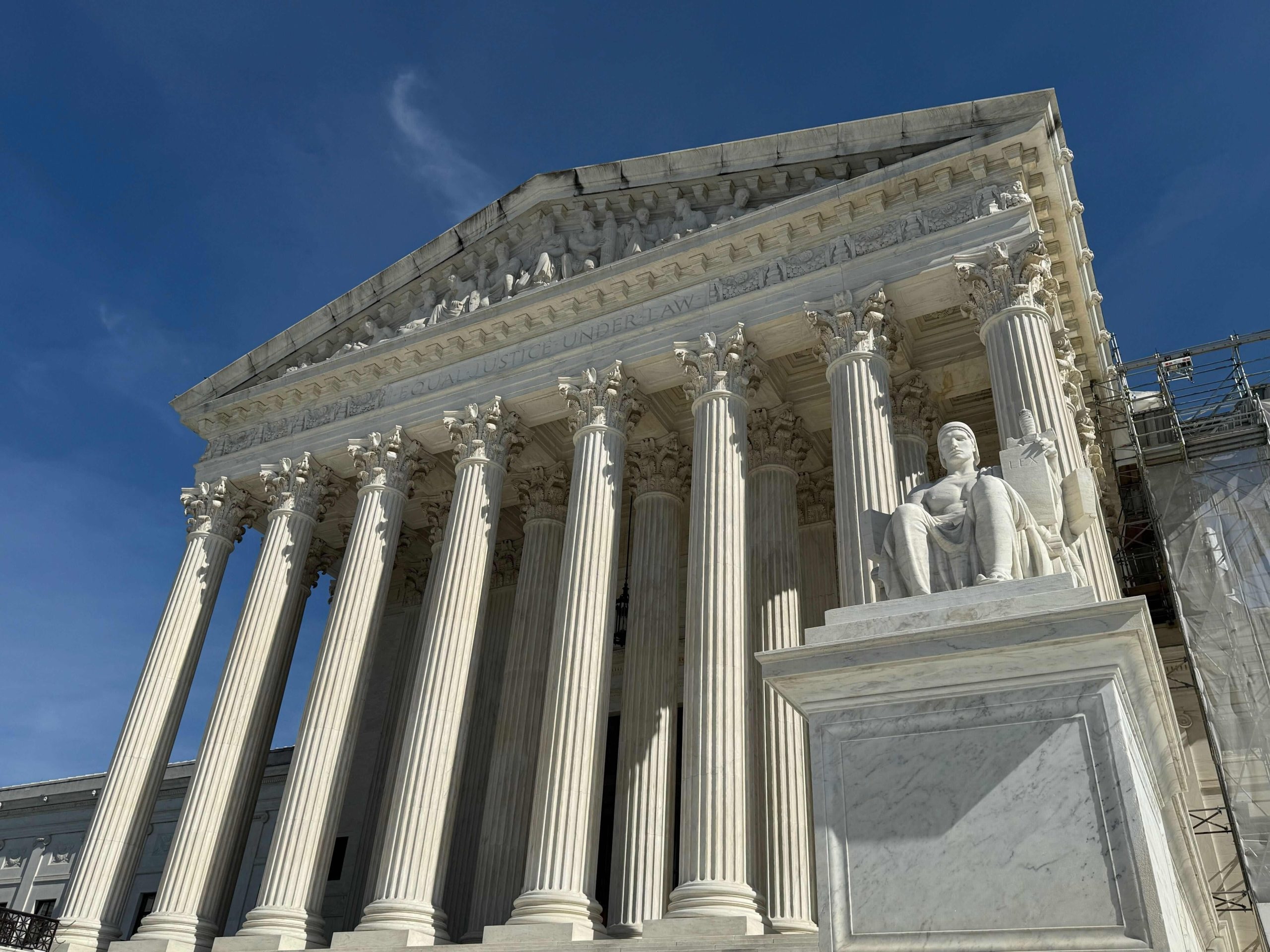
The Supreme Court on Wednesday afternoon cleared the way for California to use a new congressional map intended to give Democrats five additional seats in the U.S. House of Representatives. In a one-sentence order, the justices turned down a request from a group of California Republicans that would have required the state to continue to use the map in place for the last several federal elections in the state while their challenge to the map moves forward.
There were no public dissents from the court’s ruling.
The court’s order came exactly two months after the justices, over a dissent by the court’s three Democratic appointees, granted a request from Texas to allow it to use a new map intended to allow Republicans to pick up five additional House seats in that state. In Abbott v. League of United Latin American Citizens, the lower court had agreed with the challengers that the “legislature’s motive was predominantly racial.” But the majority put that ruling on hold in its Dec. 4 order, with Justice Samuel Alito – who penned an opinion (joined by Justices Clarence Thomas and Neil Gorusch) concurring in the ruling – stating that “it is indisputable … that the impetus for the adoption of the Texas map (like the map subsequently adopted in California) was partisan advantage pure and simple.”
California’s path to the enactment of its new map was slightly more complicated than in Texas. The California Legislature adopted the new map in August, but under the state constitution an independent redistricting commission – rather than the Legislature – normally has the power to redistrict. The legislation adopting the new map therefore proposed a ballot initiative, known as Proposition 50, that would amend the constitution to allow the use of the new map from 2026 through 2030. By a roughly two-to-one margin, the state’s voters approved the initiative in a special election on Nov. 4.
Three days later, the challengers went to court to try to block the use of the map. They argued that the map violated the Constitution because it relied too heavily on race in drawing 16 congressional districts that impermissibly favored Latino voters.
A divided three-judge district court – which Congress has tasked with hearing congressional redistricting cases – turned down their request, leaving the new map in place. Writing for the majority, U.S. District Judge Josephine Staton concluded “that the evidence of any racial motivation driving redistricting is exceptionally weak, while the evidence of partisan motivations is overwhelming.” Staton also rejected the challengers’ contention that even if the voters had partisan motives when they approved Proposition 50, “they were simply dupes of a racially-motivated legislature.”
The challengers came to the Supreme Court on Jan. 20, asking the justices to step in. They argued that the state’s goal all along had been “offsetting a perceived racial gerrymander in Texas.” Moreover, they added, the lower court should have given more weight to the testimony by the private consultant, Paul Mitchell, who drew the new map – and who “boasted publicly and on social media,” they said, that the new map “would maintain, if not expand, Latino voting power in California.” They asked the court to act by Feb. 9, when the window for congressional candidates to file paperwork declaring their candidacies opens in California.
The state countered that the lower court considered statements by the private consultant and state legislators, but it had nonetheless concluded that the new map was not racially motivated. More broadly, it contended, the challengers were “asking the Court to treat California’s map differently from how it treated Texas’s map, thereby allowing a Republican-led State to engage in partisan gerrymandering while forbidding a Democratic-led State from responding in kind.”
On Wednesday afternoon, with five days remaining before the Feb. 9 deadline requested by the challengers, the court turned down the challengers’ request to intervene.
Posted in Court News, Emergency appeals and applications
Cases: Tangipa v. Newsom