SCOTUStoday for Friday, January 9
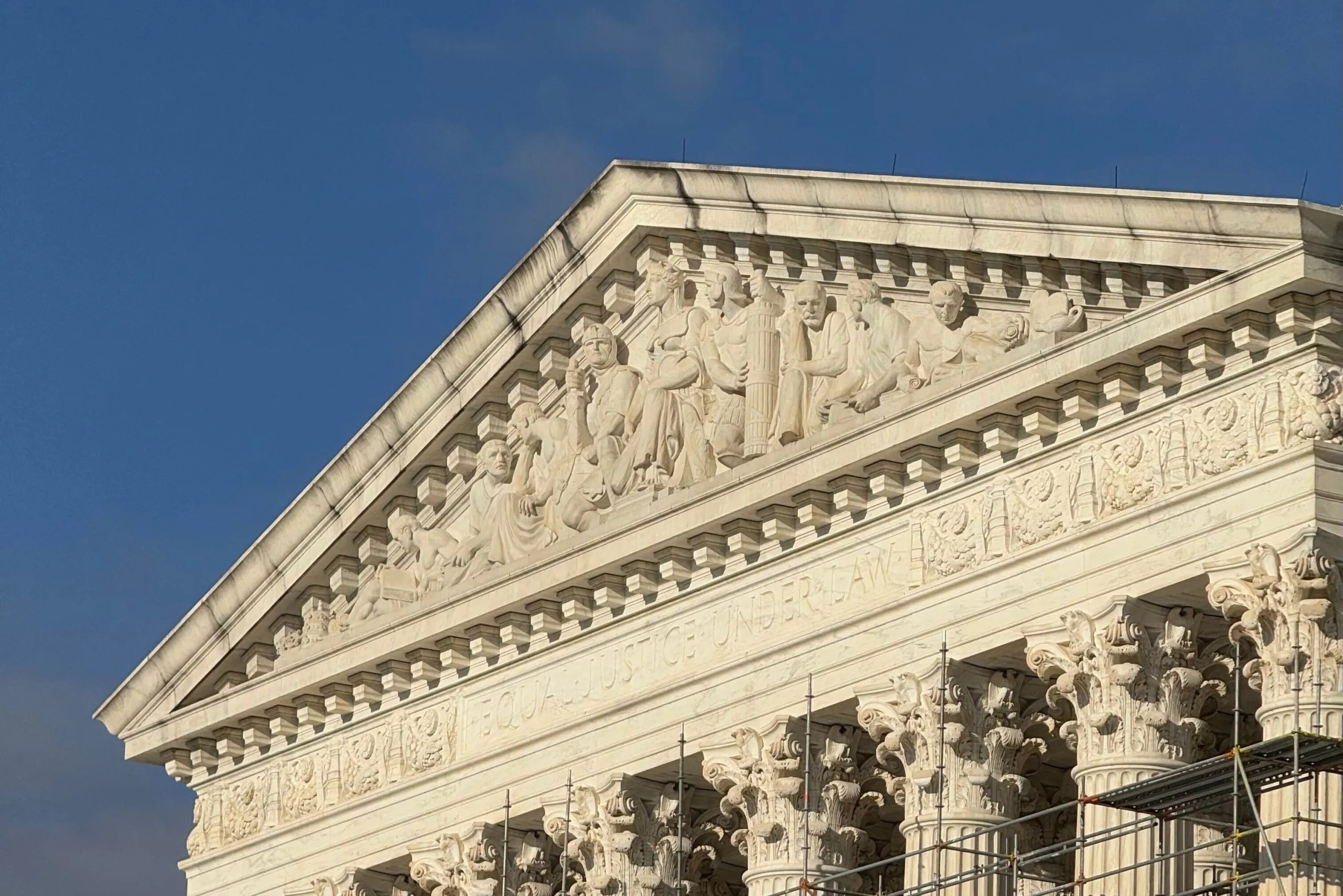
Good morning, and welcome to what is expected to be the first opinion day of the 2025-26 term. We don’t know what decisions are coming, but we do know we’ll be live blogging our way through it.
SCOTUS Quick Hits
- The Supreme Court may announce opinions today at 10 a.m. EST. SCOTUSblog will be live blogging beginning at 9:30.
- Later today, the justices will meet to consider petitions for review. We may know as soon as this afternoon if the court has added any new cases to the oral argument docket.
- The court is expected to release an order list with denied petitions and other case updates on Monday at 9:30 a.m. EST.
- The court’s January argument session will begin on Monday. The court will hear seven arguments over two weeks, including on transgender athletes; the latest chapter in the court’s gun rights jurisprudence; and President Donald Trump’s bid to remove Lisa Cook, a member of the Federal Reserve’s Board of Governors.
- In a letter released by the Supreme Court on Thursday, Justice Samuel Alito indicated that he will not continue to participate in Chevron USA Inc. v. Plaquemines Parish, Louisiana, which will be argued on Monday, because he has a financial interest in ConocoPhillips, which is the parent company of one of the defendants in the case. Although the company, Burlington Resources Oil and Gas Co., is not involved in the Supreme Court proceedings, the letter explained, it remains a defendant in the lower court.
Morning Reads
- More Than 1,000 Companies Are Suing Trump Over His Tariffs (Zoe Tillman, Jeannette Neumann, and Laura Curtis, Bloomberg)(Paywall) — A Supreme Court ruling on tariffs may not bring an end to legal battles over President Donald Trump’s trade policy. In recent weeks, according to Bloomberg, “a flood of businesses spanning the global economy” have sued over the tariffs in anticipation of having to fight for refunds if the president loses the Supreme Court case. “Publicly traded companies, including Costco Wholesale Corp., EssilorLuxottica SA, and Goodyear Tire & Rubber Co., are among the stampede of companies suing for refunds. In the first days of 2026 alone, dozens of entities, including Dole Fresh Fruit Co., e.l.f. Cosmetics Inc. and J. Crew Group LLC, have sued.”
- The Supreme Court may leave alone the Voting Rights Act just long enough to keep the GOP from House control in 2026 (Samuel Benson and Andrew Howard, Politico) — The court’s eventual ruling in Louisiana v. Callais, a case on race, redistricting, and the Voting Rights Act, is expected to spark a wave of redistricting efforts aimed at benefiting Republicans. But the farther we get into the new year, the less likely it is that the decision will affect the 2026 elections, since states are running out of time to not only draw new maps, but also “shift election calendars, vet signatures and print and distribute ballots,” according to Politico. Seven southern states “have primaries scheduled before or on May 19 — making the timing even tougher for the GOP.”
- Supreme Court Ruling That Could Determine ICE Agent’s Fault in Shooting (Jenna Sundel, Newsweek) — The Supreme Court’s 2025 ruling in Martin v. United States “could play a role in determining whether an ICE agent can be held responsible for the fatal shooting of a woman in Minneapolis on Wednesday, if the death results in legal action,” according to Newsweek. In that case, the court unanimously decided to allow a family’s suit against the government over an FBI raid that incorrectly targeted their house to move forward.
- Western Apaches return to Ninth Circuit to defend holy land (Joe Duhownik, Courthouse News Service) — Western Apaches continue to fight a plan to construct a copper mine in an area of eastern Arizona that they consider sacred, but after the Supreme Court declined to get involved in their case in May (and again in October), they appear to be facing an uphill battle in front of the U.S. Court of Appeals for the 9th Circuit, where they’re seeking a preliminary injunction that would put the project on hold. “This issue went to the Supreme Court, which spent months deliberating whether to take the case and didn’t do so,” U.S. Circuit Judge Daniel Bress said during the latest hearing, according to Courthouse News Service. “You’ve preserved this for further review, but it’s tough to accept the position that we could just reach a different result on what’s essentially the same claim.”
- Why the A’s Hit a Legal Snag Trademarking Their Las Vegas Name (Ben Horney, Front Office Sports) — The Oakland Athletics, or Oakland A’s, are moving to Las Vegas in 2028. As part of the move, the team is seeking to trademark “Las Vegas Athletics,” but it’s been unsuccessful thus far, according to Front Office Sports. “On Dec. 29, the [U.S. Patent and Trademark Office] issued a second refusal of trademark applications to register ‘Las Vegas Athletics‘ and ‘Vegas Athletics.’ Experts say the refusal doesn’t threaten the team’s relocation plans, but it highlights a quirk of U.S. trademark law: Even one of Major League Baseball’s most storied franchises can’t automatically carry brand protections with it when it moves cities.” If the USPTO persists in denying the trademark, the team “could still appeal to the Trademark Trial and Appeal Board” and, eventually, to the Supreme Court. In a 2020 Supreme Court case, “Booking.com [won] the right to register its name as a trademark, despite the USPTO’s argument that its name was too generic.”
A Closer Look: Chief Justice John Marshall, Part I
Perhaps the chief justice least suited for a “closer look” is Chief Justice John Marshall – after all, novels upon novels, including one by his late colleague Justice Joseph Story, have attempted to cover Marshall’s life and influence on the court.
As the oldest of 15 children, Marshall was raised in rural Virginia in a two-room log cabin. The future chief justice attended the local school – to reach it, he supposedly walked 60 miles by himself. Although his father served in local government as a colonial legislator and a justice of the peace, Marshall’s family often struggled financially.
At 19, Marshall left home to serve in the Virginia Continental regiment as an officer and then captain, joining his father, who had raised a state militia unit with members who would later constitute some of the Culpeper Minute Men, famous for having “Liberty or Death” sewn on their uniforms. Fortunately for Marshall, he had connections in high places: General George Washington and his father were friendly – they had been neighbors in Virginia and, for a time, went to school together. The future president recognized the young Marshall’s legal acumen: Although Marshall had not (yet) gone to law school, Washington named him deputy judge advocate general of the Continental Army, where he oversaw matters of military justice.
Marshall also resolved conflicts his fellow soldiers would bring to him, becoming known among some as the “best-tempered man” in the camp. It was during these years that he earned the nickname “Silver Heels” – a tribute to the white yarn his mother knitted into his stocking heels, which was visible when he won races. Marshall spent the infamous winter at Valley Forge (sharing a tent with future President James Monroe, whom he knew from school). Scholars believe Marshall’s wartime experience influenced his Federalist views, having witnessed firsthand the difficulties that came with a weak, decentralized federal government which needed to rely on the states for supplies.
Once his active service ended in 1780, Marshall departed for Williamsburg, formally learning the law under the first American law professor, George Wythe, and alongside his future fellow justice and the nephew of George Washington, (the delightfully named) Bushrod Washington. Marshall earned his law license in just three months. By this time, Marshall’s notes also included scribbles of the name of his new love and future wife, Mary “Polly” Willis Ambler. Their relationship was a cornerstone of Marshall’s life – after Polly initially declined his proposal due to nervousness, she sent a lock of her hair to Marshall to signal her feelings, and they soon married.
Marshall and Polly settled in Richmond shortly after their wedding, where he began building a successful legal career representing clients in civil matters before Virginia’s courts. His intellect earned him a reputation as one of the state’s leading attorneys, even as Marshall maintained a famously shabby appearance – tall and lanky with rumpled clothes. (This modest appearance and demeanor partly led to the inclusion of Marshall in children’s books on good character – see, for example, “The Dandy and His Turkey,” an anecdote about Marshall showing humility after being mistaken for a servant and helping a young man carry a turkey home). At the same time, Marshall would enslave more than 200 people during the course of his life, and many of those he enslaved never lived to see freedom.
Marshall joined the Virginia House of Delegates in 1782, supporting both ratification of the Constitution and stronger federal powers – positions that clashed with those of his second cousin once removed Thomas Jefferson, who favored states’ rights. In 1797, President John Adams sent Marshall as a diplomat to France during the XYZ Affair, in which French agents sought bribes as a precursor to substantive negotiations with the French government (Marshall refused). The mission lasted a year instead of weeks, during which Polly, pregnant with their child, faced hardships, including the death of her father. Upon his return, Marshall gave Polly “apology” china for his extended absence. Also upon his return, Marshall declined Adams’ appointment to the Supreme Court (as the successor to Justice James Wilson). He did, however, heed George Washington’s request that he run for Congress. Marshall was elected in 1799 as a Federalist, though he opposed the alien and sedition laws. But his time in Congress did not last long: Adams offered Marshall the position of Secretary of State in 1800, and he accepted.
Having already established himself as an apt state legislator, successful lawyer, and diplomat, Marshall would be appointed chief justice (while serving as secretary of state) by outgoing President Adams in 1801, after Chief Justice Oliver Ellsworth resigned in late 1800 and John Jay declined reappointment.
And with that begins the story of Marshall’s court tenure – the second half of his life to be revisited (and concluded) in a later closer look.
SCOTUS Quote
“Nothing is more certain in modern society than the principle that there are no absolutes, that a name, a phrase, a standard has meaning only when associated with the considerations which gave birth to the nomenclature.”
— Chief Justice Fred Vinson in Dennis v. United States
On Site
Case Preview
The transgender athletes cases: an explainer
On Tuesday, Jan. 13, the court will hear two cases on laws barring transgender women and girls from participating in women’s and girls’ sports. To preview the cases, Amy wrote an explainer on the issues involved.

Contributor Corner
Litigating gun rights: an interview with Pete Patterson
For her latest A Second Opinion column, Haley Proctor spoke with Pete Patterson, a partner at Cooper & Kirk PLLC and expert on the Second Amendment, about some of the most pressing questions in Second Amendment law.

Posted in Featured, Newsletters