SCOTUStoday for Friday, January 30
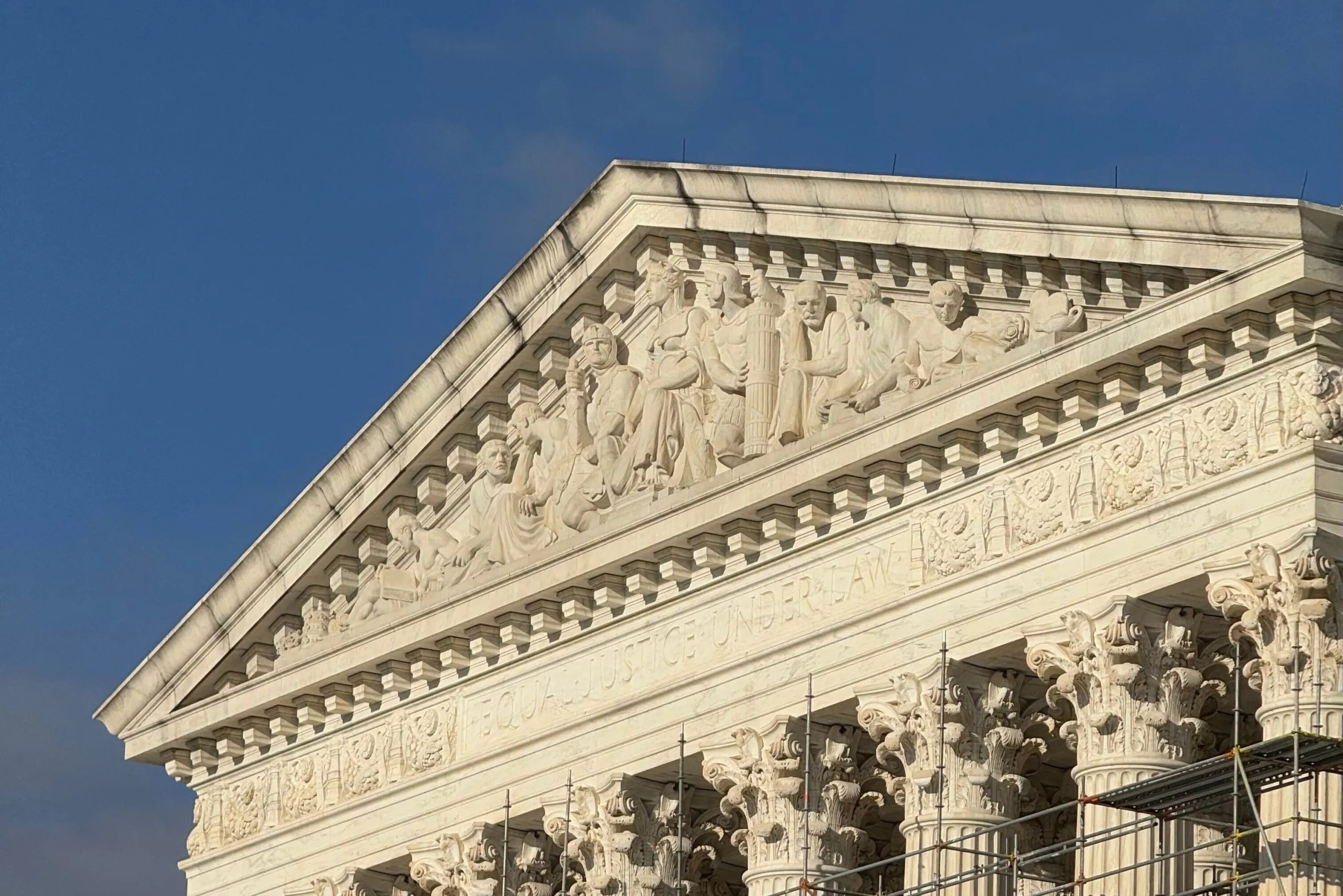
Looking for some Supreme Court-themed weekend reading? Consider Robert H. Jackson: A Life in Judgment, a new book on former Justice Robert H. Jackson that’s been highlighted in The Washington Post and Moment Magazine in the past week. And remember that our own Sarah Isgur’s book, Last Branch Standing, is coming in April. If you preorder it before Monday, Feb. 9, you can claim a signed bookplate.
Finally, a reminder: we’re hiring! We’re looking for an editor to oversee a new daily newsletter for commercial litigators and corporate counsel that highlights circuit court decisions, relists, denials, en banc grants, and notable dissents.
SCOTUS Quick Hits
- Last week, a group of California Republicans asked the court on its interim docket to block the state from using its new map in this year’s elections. On Thursday, California officials, the Democratic Congressional Campaign Committee, and the League of United Latin American Citizens filed their responses to that request. Once the California Republicans file a reply, the case will be fully briefed. For more on the latest filings, see the On Site section below.
- An interim docket case on California’s policies regarding parental notification when public school students choose to use different pronouns or a different gender identity is fully briefed, and the court’s decision could come at any time.
- The court has not yet indicated when it will next release opinions. If the court follows its typical pattern, the earliest the next opinion day may be is Friday, Feb. 20, when the justices are next scheduled to be in the courtroom.
- The court will next hear arguments on Monday, Feb. 23, the first day of its February sitting.
Morning Reads
- US appeals court says Noem’s decision to end protections for Venezuelans in US was illegal (Sudhin Thanawala, Associated Press) — Late Wednesday, the U.S. Court of Appeals for the 9th Circuit ruled “that the Trump administration acted illegally when it ended legal protections that gave hundreds of thousands of people from Venezuela permission to live and work in the United States,” according to the Associated Press. “Ninth Circuit Judges Kim Wardlaw, Salvador Mendoza, Jr. and Anthony Johnstone said in Wednesday’s ruling that the TPS legislation passed by Congress did not give the [Homeland Security] secretary the power to vacate an existing TPS designation.” But their ruling “will not have any immediate practical effect after the U.S. Supreme Court in October allowed” the administration to remove protected status from Venezuelan nationals “pending a final decision by the justices.”
- What We Learned After Tracking Every Lawsuit Challenging Trump’s Policies (Mattathias Schwartz, The New York Times)(Paywall) — For the past year, “The New York Times has been tracking every lawsuit challenging President Trump’s policies.” On Thursday, Mattathias Schwartz published a look at what his team has learned from following these 600+ cases, which included a summary of the Supreme Court’s role in them so far. “In 24 cases in 2025, the Supreme Court started to contemplate the Trump agenda, mostly considering whether to issue temporary orders allowing pieces of it to take effect even as they were challenged in court. It ruled in Mr. Trump’s favor 21 times. However, the vast majority of those rulings were on the court’s emergency docket. That means that while they carry some weight as precedents for the lower courts, they are not final decisions about the underlying legality of the contested policies,” Schwartz wrote. “There are some early indications that the Supreme Court may take a different approach in 2026,” such as that “[t]he court took a skeptical tone in two cases it heard recently related to Mr. Trump’s agenda,” on tariffs and the president’s effort to remove a member of the Federal Reserve Board of Governors.
- UCLA medical school uses a ‘systemically racist approach’ to admissions, DOJ alleges (Jaweed Kaleem, Los Angeles Times)(Paywall) — The Trump administration is seeking to join a federal lawsuit against UCLA’s David Geffen School of Medicine alleging that the school “illegally considers race in its admission process,” according to the Los Angeles Times. “In documents filed in California’s Central District, the Department of Justice alleges that UCLA’s medical school uses a ‘systemically racist approach’ to admissions that privileges Black and Latino applicants over those who are white and Asian American.” The administration further alleges “that the school engages in ‘racial balancing’ — trying to create a student body that is racially reflective of California — in violation [of] the U.S. Constitution’s Equal Protection Clause and a 2023 U.S. Supreme Court decision that banned race-based affirmative action policies in college admissions.” The UCLA lawsuit was filed by, among others, Students for Fair Admissions, “the organization that filed a suit leading to the [2023] Supreme Court ruling.”
- I worked for Justice Alito. What I saw up close shatters the media smear (Ben Aguiñaga, Fox News) — In a column for Fox News, Louisiana Solicitor General Ben Aguiñaga pushed back against reports that Justice Samuel Alito is “unhappy,” “aggrieved,” and “wronged” by describing his experience clerking for the justice. “The Justice Alito I know is kind, humble, thoughtful and selfless,” Aguiñaga wrote. “I know because he believed in me — and I am a better man because of his example.”
- 3 Tips for Appellate Advocates—From Paul Clement (David Lat, Original Jurisdiction) — In a post for his Substack, David Lat revisited last week’s argument in Trump v. Cook, on President Donald Trump’s effort to remove Fed Governor Lisa Cook from office, and explored what makes Paul Clement, who represented Cook, such an effective advocate. Lat highlighted Clement’s listening skills, nimbleness, and conversational tone.
A Closer Look: Chief Justice John Marshall, Part II
As noted in our last Closer Look on Chief Justice John Marshall, approximately seven months after assuming the office of Secretary of State in June 1800, Marshall was appointed chief justice by outgoing President John Adams, to whom he wrote, “I hope never to give you occasion to regret having made this appointment.”
Marshall sought to make a statement almost immediately. During the first session in which he presided over the court, the new chief introduced the tradition of black judicial robes (if you’re interested, you can see Marshall’s only surviving judicial robe during your next visit to Richmond). As the story goes, Marshall was initially the only one to don black, but the associate justices eventually followed, trading in their scarlet and ermine robes. Marshall also led the court away from the English tradition of seriatim opinions, or having each justice deliver an opinion in every significant case.
Of course, Marshall made his biggest mark jurisprudentially. His most famous case remains – for good reason – Marbury v. Madison, where the court declared in 1803 that part of the Judiciary Act of 1789 was unconstitutional and, in doing so, established judicial review. As Marshall famously wrote, “It is, emphatically, the province and duty of the judicial department, to say what the law is.” The case was also the first in which the court invalidated a law passed by Congress.
But this was far from Marshall’s only accomplishment. The court’s 1819 opinion in McCulloch v. Maryland helped establish the supremacy of federal law over state law, by holding that Maryland could not tax the Second National Bank and affirming Congress’ implied powers under the necessary and proper clause. Marshall was heavily criticized in some corners for this decision, and he responded by writing multiple op-eds defending his reasoning, signing these as “A Friend of the Constitution.” In that same year, Marshall extended the protections of the Constitution’s contract clause to private companies (such as concerning college endowments) in Dartmouth v. Woodward.
Marshall’s other key rulings included, but are not limited to: Fletcher v. Peck (an 1810 decision marking the first time the court invalidated a state law), Sturges v. Crowninshield (an 1819 opinion addressing state bankruptcy laws), Gibbons v. Ogden (the 1824 “steamboat monopoly case” that broadly interpreted Congress’ power under the commerce clause to regulate interstate business), and Worcester v. Georgia (an 1832 case in which the court concluded that the federal government had the authority to regulate relations with the Indian tribes through treaties and commerce powers and which laid certain bedrocks of tribal sovereignty). Marshall also presided over the treason trial of former Vice President Aaron Burr in 1807.
Beyond issuing such monumental cases (he participated in over 1,000 decisions and wrote more than 500), Marshall continued to host the justices for dinners in a D.C. boarding house – and would quip that the court’s vast jurisdiction surely included some rainy spot, justifying a drink.
Marshall died in 1835, having left the court for health reasons roughly six months prior. Today, the court’s greatest chief justice lies in Richmond’s Shockoe Hill Cemetery under a modest epitaph, noting only his parents’ names, when he was born, his marriage, and the date of his death.
SCOTUS Quote
CHIEF JUSTICE ROBERTS: “Well, can the tribe be sued in state court?”
JUSTICE BREYER: “Yeah, general jurisdiction.”
CHIEF JUSTICE ROBERTS: “Can the federal government be sued in state court?”
JUSTICE BREYER: “You can. Yeah.”
CHIEF JUSTICE ROBERTS: “I’m asking you.” (Laughter.)
MR. GANT: “I don’t want to get in the way of a good discussion.”
On Site
From the SCOTUSblog Team
When will we get the tariffs ruling?
As the country continues to debate not just how the Supreme Court will rule on tariffs, but also when, Amy wrote a brief explainer on how the court goes about drafting and issuing opinions, and how that process might be playing out in the tariffs dispute.

California urges court to permit it to use congressional map enacted to counter Republican gains in Texas
Lawyers for the state of California on Thursday urged the Supreme Court to leave in place a new congressional map intended to give Democrats five additional seats in the U.S. House of Representatives. It is “deeply unnatural,” the state contended, for the group of California Republicans to ask the justices “to step into the political fray, granting one political party a sizeable advantage by enjoining California’s partisan gerrymander after having allowed” Texas to implement a map intended to give the same boost to Republicans.

Posted in Featured, Newsletters