SCOTUStoday for Thursday, December 4
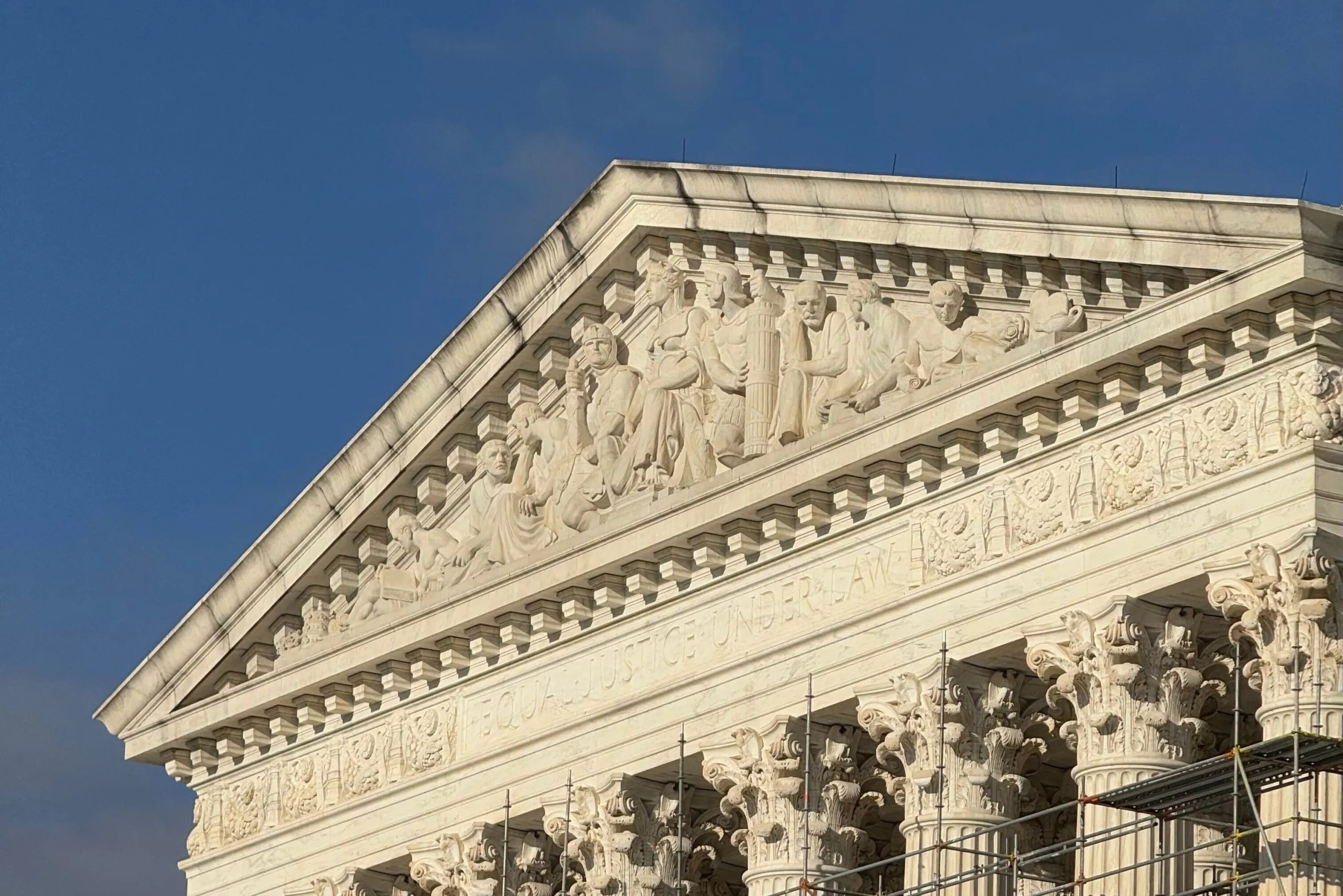
One year ago today, the Supreme Court heard oral arguments in United States v. Skrmetti, one of the highest profile cases of the 2024-25 term. On June 18, the court issued its ruling, which upheld Tennessee’s ban on certain medical treatments for transgender minors.
SCOTUS Quick Hits
- The Supreme Court is done hearing argument for the week.
- The court could issue its decisions in the interim docket cases on President Donald Trump’s effort to deploy the National Guard to Illinois and Texas’ new congressional map at any time.
- The justices will take part in a private conference on Friday to discuss cases and vote on petitions for review.
- Justice Ketanji Brown Jackson is set to be the keynote speaker at the National Council for the Social Studies’ conference this weekend in Washington, D.C.
- On Monday, SCOTUSblog will be hosting a live blog during the oral argument in Trump v. Slaughter. The live blog will begin at 9:30 a.m. EST.
Morning Reads
- Bessent says Trump admin will be able to replicate tariffs even if it loses Supreme Court decision (Jeff Cox, CNBC) — U.S. Treasury Secretary Scott Bessent on Wednesday said the Trump administration can continue pursuing its trade agenda regardless of how the Supreme Court rules in this term’s tariffs case. Even if the court prevents the administration from using the International Emergency Economic Powers Act to impose tariffs, “[w]e can recreate the exact tariff structure with [sections] 301, with 232, with 122″ of the 1962 Trade Act, Bessent contended, according to CNBC. “He added that he still thinks the U.S. stands a good chance of prevailing in the Supreme Court case.”
- Judge orders Trump administration to halt warrantless immigration arrests in District of Columbia (Ryan Knappenberger, Courthouse News Service) — On Tuesday night, U.S. District Judge Beryl Howell limited the circumstances under which the Trump administration can make warrantless immigration arrests in Washington, D.C., holding that the administration has improperly characterized “all immigrants who entered the U.S. without permission as ‘illegal alien criminals,'” according to Courthouse News Service. “First, ‘as a general rule, it is not a crime for a removable alien to remain present in the United States,’” Howell wrote, citing the Supreme Court’s decision in Arizona v. United States. “As a legal matter, an immigration status violation is a civil violation. Consequently, viewing all immigrants potentially subject to removal as criminals is, as a legal matter, plain wrong.”
- Texas families file class action lawsuit over law mandating Ten Commandments in schools (Steven Rosenbaum, CBS News) — On Tuesday, 18 families with children in Texas public schools filed a class action lawsuit over a state law requiring the Ten Commandments to be displayed in classrooms. “[T]he lawsuit asks the judge to block all Texas school districts from enforcing the law,” claiming it “violates the First Amendment,” according to CBS News. The law is already on hold in certain districts in Texas due to previous lawsuits. These disputes likely will be impacted by a separate battle in Louisiana, where a federal district judge ruled last December that Louisiana’s own Ten Commandments law was unconstitutional, “citing a 1980 Supreme Court decision over a similar law in Kentucky.” Next month, “all 17 judges” on the U.S. Court of Appeals for the 5th Circuit, which includes Texas and Louisiana, will consider Louisiana’s Ten Commandments law.
- Oklahoma asks SCOTUS to ignore Muscogee citizen tax dispute or ‘revisit McGirt’ ruling (Sarah Liese and Robby Korth, Oklahoma Public Media Exchange, KGOU) — In its response to a petition for review from a Muscogee Nation citizen, the Oklahoma Tax Commission on Monday urged the Supreme Court to leave in place a state supreme court decision that “requires tribal citizens who work for their tribe and live on their reservation to pay Oklahoma income tax,” according to KGOU. In her petition, Alicia Stroble asked the court to review the state supreme court’s decision and hold that it violates McGirt v. Oklahoma, a 2020 case in which the Supreme Court held that the Muscogee (Creek) Reservation is Native American territory. “[T]he five largest tribes in Oklahoma have” filed friend-of-the-court briefs in favor of Stroble’s petition.
- One-man play in Athens to celebrate life of Thurgood Marshall (Wayne Ford, Athens Banner-Herald) — A one-man play celebrating the life of former Justice Thurgood Marshall, who was a prominent civil rights lawyer before becoming the first Black Supreme Court justice, is coming to Athens, Georgia, this weekend, according to the Athens Banner-Herald. “Proceeds from the performances will support the Athens Area Paine College Holsey Scholarship Fund and the United Negro College Fund.”
A Closer Look: Supreme Court Clerks
We know that during their time on the court, the justices’ clerks play a crucial role in the court’s operations – among other things, they screen thousands of certiorari petitions to help the justices decide which cases to hear, prepare the justices for oral arguments, draft opinions, and review drafts from other chambers.
Indeed, the importance of clerks has grown significantly since the mid-20th century, when they began taking on more substantive legal duties amid an expanding docket, evolving from typists, in some scenarios, to full-on “extensions of the chambers’ work.” Today, the positions are extremely competitive, with only 36 spots available annually for active justices (four for each justice and five for the chief, although he does not typically hire a fifth clerk), drawing applicants from elite pipelines that involve recommendations from professors, “feeder” judges, and former clerks.
Aspiring clerks typically go to a handful of top law schools, with more than two-thirds of clerks over the past few decades hailing from Harvard, Yale, Stanford, Columbia, or the University of Chicago. One notable trend of late is that of multiple prior clerkships; two decades ago, nearly all clerks had just one federal appeals court clerkship, but today such individuals often have at least two of these under their belt (with some having three prior clerkships). Other shifts include greater demographic diversity, with the 2025-26 term’s class nearing gender parity (although, as Sarah Isgur has noted, multiple clerkships can add an additional burden on women and those that must take on debt from law school).
But what, exactly, do clerks do before and after their time at One First Street?
As Adam Feldman wrote for SCOTUSblog in October, Supreme Court clerks often form “networks of power” that extend far beyond their one-year clerkship – with many going on to work in the judiciary, government, and private sector. After their clerkships, many former clerks find themselves with a host of lucrative opportunities, with some Big Law firms offering signing bonuses of up to $500,000 (it’s little surprise then that this accounts for 70% of recent clerk placements upon finishing up, with many landing at firms like Jones Day, Gibson Dunn, and Kirkland & Ellis). Some go on to become federal judges, and a few even end up back on the court itself: Six of the nine justices – Chief Justice John Roberts and Justices Elena Kagan, Neil Gorsuch, Brett Kavanaugh, Amy Coney Barrett, and Ketanji Brown Jackson – previously served as Supreme Court clerks.
SCOTUS Quote
JUSTICE GORSUCH: What — what’s your best shot in maybe two lines?
MR. BUTLER: How many commas do I get?
On Site
Case Preview
Trump v. Slaughter: An Explainer
On Monday, the Supreme Court will hear oral arguments in Trump v. Slaughter, a battle that has been brewing, on one hand, since soon after President Donald Trump took office in January and, on the other hand, for years. At the center of the battle are laws that limit the president’s ability to fire the heads of independent, multi-member federal agencies like the Federal Trade Commission. The court will consider whether such laws violate the separation of powers. For more on the case, read Amy’s explainer.
Contributor Corner
Morrison v. Olson and the Triumph of the Unitary Executive Theory
In his latest Courtly Observations column, Erwin Chemerinsky explored the “unitary executive theory” of presidential power, which is “the view that the president has authority over the entire executive branch of government,” and can therefore fire heads of agencies and any such government employees. The court has the opportunity to embrace that theory in Trump v. Slaughter and Trump v. Cook this term, about 37 years after it was “emphatically rejected” by a 7-1 court in Morrison v. Olson.
Posted in Featured, Newsletters