Event: The Impact of the Citizens United Decision on Federal Elections
Panel discussion recap

Last week, former FEC Commissioner Hans A. von Spakovsky (now affiliated with the Heritage Foundation) moderated a panel discussion at the Heritage Foundation that examined the practical impact and potential outcomes of the decision in Citizens United v. FEC.  The panel – whose other members were all veterans of the FEC and/or campaign law specialists – agreed that the decision was one of the most (if not the most) significant campaign finance decisions since Buckley v. Valeo.  The panelists also largely agreed on three other points: first, Congress and state legislatures will likely enact stricter disclosure laws to monitor corporate and labor spending on election advertising; second, the decision will likely spur further litigation and require courts and the FEC to resolve additional questions, while also addressing the status and rights of foreign corporations; third, because it is difficult to predict what the results of the decision will be, the panel should reconvene next year to reflect again on the decision.

Read the rest of this entry »


Tuesday round-up
The Term, post-Citizens; the jailhouse Supreme Court practitioner

Joan Biskupic of USA Today discusses what Citizens United may portend for the rest of the current Term, in which the Court will hear several “momentous” cases.  Biskupic opines that the contentious Citizens decision may have reinforced the Court’s “caustic ideological divide” as it moves forward in reviewing and deciding pending cases, and in particular other high-profile cases such as McDonald v. City of ChicagoDoe No. 1 v. Reed, and Free Enterprise Fund v. PCAOB.  Meanwhile, at the Huffington Post, Frances Moore Lappe criticizes the decision as eliminating “the freedom to choose among a range of political candidates far wider than those favored by our society’s vast concentrations of wealth.” Also at the Huffington Post, Chris Weigant discusses how the decision might affect politics “out of sight of the viewing public,” exploring scenarios in which a corporation could manipulate media airtime or use the threat of election spending to influence pending legislation.  Finally, at Politico, Jeanne Cummings reports on public opposition to the Citizens United decision and its possible effects for both parties in the upcoming midterm elections.

Read the rest of this entry »


Monday round-up
Justice Thomas on clerks and advocates; judicial nominations and vacancies

Above the Law reports that Justice Thomas, discussing clerk hiring at his Thursday talk at the University of Florida, contrasted his views with those of his colleagues, whom he says mainly hire clerks from Ivy League schools.  “I don’t believe they [Ivy League schools] have a monopoly on intelligence,” said Thomas. “I also don’t believe they have a monopoly on the best kids to clerk.”  Tony Mauro reports that Thomas also praised  Silvia Ibanez, an advocate from Florida who represented herself, and, according to Thomas, persuaded the Court to rule in her favor in a 1994 case.  The Foundry also weighs in, focusing on Thomas’ remarks on the State of the Union speech.  The University of Florida’s campus newspaper measures student reactions to the discussion.

Read the rest of this entry »


Friday round-up
Justice Thomas' Q&A, an advocate for Chicago's handgun ban, and a feature on Scalia

As Tony Mauro reports at the BLT, Justice Thomas answered questions yesterday from students at the University of Florida, after speaking on Wednesday at Stetson University College of Law.  Justice Thomas touched on a range of issues, including his preference for hiring non-Ivy League law clerks and his opinion that Supreme Court justices are just “second guessers” whose work is not as hard as that of district court judges.  The AP discusses the Justice’s remark that some commentary about the Court is “irresponsible.” The local Gainesville Sun and the CBS News blog also have coverage of the event, and you can read Josh Blackman’s LiveBlog of the event here.  After Justice Thomas’s earlier remark at Stetson that he no longer attends State of the Union addresses because he finds them uncomfortable, Ben Smith of Politico briefly summarized his recent attendance record.

Yesterday Ariane de Vogue of ABCNews reported that the White House may be gearing up to fill two Court vacancies this summer, which would be created if both Justice Stevens and Justice Ginsburg decided to step down.

Read the rest of this entry »


Thursday round-up
Speeches by Justices Kennedy and Thomas

Plans for a legislative response to the Court’s decision in Citizens United v. FEC were much in the news yesterday. Ryan Grim of The Huffington Post reports that “House Democrats are forming a Citizens United task force to decide on the best set of legislative push back[s].” The BLT has a post on yesterday’s House Judiciary subcommittee hearing on the issue, headlined by Harvard’s Laurence Tribe as a witness. In a separate post, the BLT’s David Ingram writes that the idea of banning books looms over the debate: “In two congressional hearings today, advocates for corporate and union spending in campaigns ridiculed the idea that the federal government can ban books, suggesting that they plan to use the specter of extreme censorship to try to block any new legislation.” NPR has a report on yesterday’s hearings, and Yale’s Heather Gerken—author of yesterday’s post on this blog about Justice Kennedy and race—links to her submitted testimony at Balkinization (which is also highlighted at ACSblog).

Read the rest of this entry »


Wednesday round-up
Commentary on Citizens, two new cert. petitions, and Prop. 8 trial coverage

Last month’s Supreme Court ruling in Citizens United v. FEC is still making headlines.  In an opinion piece for Politico, Nan Aron discusses the case in the context of judicial nominations, arguing that the decision reflects the strong influence of the Court’s conservative Justices.  Based on the “politically driven” records and confirmation-hearing performances of Chief Justice John Roberts and Justice Samuel Alito, Aron posits, Democrats should not be surprised at the ruling in Citizens, and they should further be mindful of GOP attempts to stall the confirmations of more politically moderate judicial nominees.  Also looking forward, David Schenck writes for the Texas Tribune that Citizens will almost certainly contribute to the end of direct elections for state judges: in combination with the Court’s decisions in Republican Party v. White and Caperton v. Massey, Citizens will bring corporate influence over judicial elections into full public view, contributing to a profound loss of voter confidence in the judicial electoral process.  At the Christian Science Monitor, Warren Richey and Linda Feldmann have an informative piece on Citizens, clarifying a number of the issues that have arisen in the recent controversy over the case.

Read the rest of this entry »


Citizens United, Shareholder Rights, and Free Speech: Restoring the Primacy of Politics to the First Amendment, Part II
Shareholder rights and foreign corporations

The following is the conclusion of an opinion piece on the decision in Citizens United v. Federal Election Commission by Professor Bradley A. Smith.  The piece starts in the post below, here.

At the same time that the Citizens United v. FEC dissenters launch their remarkable assault on shareholder rights, they claim to be defending the rights of shareholders.  This schizophrenic position seems to be the result of schizophrenic beliefs about a subsidiary issue.  The desire to “do something,” as we have seen, comes about precisely from the belief that corporations, when engaging in political participation, will focus solely on turning a profit for their shareholders, as Justice Stevens said in the Citizens dissent.  This is the quid pro quo rationale that has long undergirded campaign finance restrictions, since Buckley v. Valeo, and even the “corrosion” rationale behind the now overruled Austin v. Michigan Chamber of Commerce: corporations will attempt to influence public policy solely to gain undue favors that enrich their shareholders.  Yet now, we are told that corporate spending must be limited to protect those same shareholders from, in Professor Tribe’s words, corporations “squandering their property in federal elections.”  Thus, corporate spending on politics must be limited because managers (unlike other individuals?) will promote policies solely to maximize profits to the corporation, but must be restricted because in doing so they are “squandering” corporate resources.  The two propositions do not work in tandem.

Read the rest of this entry »


Citizens United, Shareholder Rights, and Free Speech: Restoring the Primacy of Politics to the First Amendment, Part I
Commentary on the decision and reactions to it

The following is an opinion piece on the decision in Citizens United v. Federal Election Commission by Bradley A. Smith, Josiah H. Blackmore II/Shirley M. Nault Designated Professor of Law at Capital University Law School and chairman of the Center for Competitive Politics.  Professor Smith is a former chairman of the Federal Election Commission.  The post is divided into halves; the second part will follow shortly.

Last month’s Supreme Court decision in Citizens United v. Federal Election Commission is an important step to restoring political speech to the primacy it deserves under the First Amendment.

For years now, both outside observers such as I and members of the Court, most notably Justices Scalia and Thomas, have pointed out that the Court has been giving greater protection to such non-political speech as internet pornography, nude dancing, and the transmission of stolen communications than it has to core political speech.  These charges, whether made in judicial opinions, such as Justice Thomas’s dissent in Nixon v. Shrink Missouri Government PAC, or in public commentary have gone unanswered.  It is, of course, relatively easier to defend the First Amendment when the consequences of doing so seem unlikely to upset one’s own life or to have a broad impact (see, e.g., East Hartford Education Association v. Board of Education, upholding the right of a teacher not to wear a tie in the classroom), than it is when upholding the First Amendment may have major consequences for one’s own cherished political beliefs.  And let us make no mistake – there is a reason that the political left has been howling about Citizens United, and it is the belief that corporate political speech will benefit causes with which they disagree (see quotes from Democratic Senators and President Obama in recent newspaper stories here, here, and here).

Read the rest of this entry »


Tuesday round-up
Possible effects of Citizens in the lower courts; historical presidential criticism of the Court

Marcia Coyle at the National Law Journal discusses the impact of the Citizens United decision on cases pending in the federal courts, noting that courts in two high-profile cases have already ordered supplemental briefing on the relevance of Citizens United. Coyle also discusses several state-level cases that may be affected by Citizens. As Congress continues to explore legislative responses to the decision, ACSBlog also has this post on today’s Senate hearing on the  case.

Read the rest of this entry »


Monday round-up
Justice Alito’s reaction, implications of Citizens United, and Otis McDonald

Commentators continue to analyze Justice Alito’s reaction to President Obama’s declaration that the majority decision in Citizens United v. FEC “reversed a century of law.”  The Washington Post recalls the duo’s complicated relationship: Obama voted against Alito’s confirmation, while Alito was the only Justice not in attendance last year when Obama made a courtesy call at the Court.  Joan Biskupic, writing on her Court Beat blog, describes her interactions with Alito, who “has a quiet demeanor yet a definite contrary streak” and characterizes himself as a “very boring person.”  Adam Liptak, writing for the New York Times, comments on Obama’s relationship with the Court, pointing out that he overturned the Court’s ruling in Ledbetter v. Goodyear Tire & Rubber Co. by signing the Lilly Ledbetter Fair Pay Act on his first day in office. And on the subject of the Fair Pay Act, ACSblog investigates how the act has been interpreted during its first year of existence, reporting that an unanswered question for courts ”is whether and how the Act is retroactive.”

Read the rest of this entry »


This week on the Wiki
Two new opinions and even more Citizens United coverage

This week, our sister site, SCOTUSwiki, was updated to include a number of last week’s merits-stage filings.  We have added newly filed merits briefs to the case pages for Lewis v. City of Chicago, Morrison v. National Australia Bank LTD, Carr v. United States, United States v. Marcus, Berghuis v. Thompkins, Holder v. Humanitarian Law Project and Humanitarian Law Project v. Holder, Hui v. Castaneda, and United States v. O’Brien.  In addition, the Wiki now includes new amicus briefs in Lewis, Astrue v. Ratliff, Hui, O’Brien, and Barber v. Thomas.

Read the rest of this entry »


Commentary: Alito vs. Obama — who’s right?
A criticism, and a retort

NOTE TO READERS: The following is in two parts: first, an analysis of a “dialogue” between President Obama and Supreme Court Justice Samuel A. Alito, Jr., during Wednesday night’s State of the Union message; and, second, a commentary about the incident’s propriety.)

———————–

Analysis

Supreme Court Justice Samuel A. Alito, Jr., on Wednesday night allowed himself a dissent — or, perhaps, a point of privilege — at one point during President Obama’s State of the Union address in the chamber of the House of Representatives. It has much of Washington talking — at the level of common gossip, and at a more significant level.  It may have a bearing on what is shaping up as the first attempt in Congress to write a new law reacting to the Supreme Court’s decision last week in Citizens United v. Federal Election Commission.

Read the rest of this entry »


Thursday round-up
Commentary on Citizens United, especially in the State of the Union

Commentary on the Citizens United decision lingers in the headlines of Supreme Court coverage.

The topic was revived as a news item by President Obama’s sharp criticism of the decision in his State of the Union address last night.  As the Huffington Post and Politico report (with video clips), six of the Justices were in the audience; one of them, Justice Alito, was seen to mouth the reply, “No, that’s not right.” At the Volokh Conspiracy, Orin Kerr notes that, after the awkwardness of that moment, “it will be interesting to see how many Justices attend [the SOTU] next year”; in any event, he suggests that perhaps they should not attend at all.  At the BLT, Tony Mauro offers two historical angles on the event.  First, he notes that attendance by the Justices has been sporadic.  Second, the State of the Union addresses have mentioned the Supreme Court by name only nine times, and even then rarely in criticism.  In an online column for the New York Times, Linda Greenhouse suggests that what Justice Alito found “not right” was Obama’s statement that the ruling “reversed over a century of law” – a charge commonly made in the media – when in fact the early twentieth-century law banning direct political contributions by corporations was not at issue in Citizens.  Elsewhere, the New York Times briefly mentions another inaccuracy in the president’s remarks about the Court’s ruling.

Read the rest of this entry »


The new world of campaign finance law
D.C. Circuit questions FEC restraints

(NOTE TO READERS: The following post is updated, and completed, as of 1:19 p.m.)

——————————

Clearly operating on the premise that the Supreme Court last week changed the entire legal landscape for money in politics, the D.C. Circuit Court appeared on Wednesday to be leaning strongly toward giving even more freedom to campaign groups that are set up to operate independently of candidates and parties.  From the opening moment of the 65-minute hearing, most of the nine judges on the en banc Court treated the Supreme Court’s ruling in Citizens United v. Federal Election Commission as the beginning, not the end, of expansion of those freedoms.  When an FEC lawyer tried to bring up, and rely on, older precedents, he was reminded repeatedly that those came before Citizens United.

Chief Judge David B. Sentelle, in the first words spoken during the argument session, said to an independent group’s lawyer, ready to open his argument: “What do you have to add to Justice Kennedy?” — Anthony M. Kennedy was Citizen United’s author.  And when that lawyer started making his case for more freedom, Judges Sentelle and Douglas H. Ginsburg suggested that he postpone his thoughts on that until after the FEC’s lawyer (arguing second) had a chance to deal with Citizens United.  The tone of skepticism toward the FEC then continued throughout.  Judge after judge pressed for justifications of government regulation, and seemed unpersuaded by the responses.

Read the rest of this entry »


Wednesday round-up
Former Justices in the spotlight: O’Connor on Citizens United and “Justice” on NBC

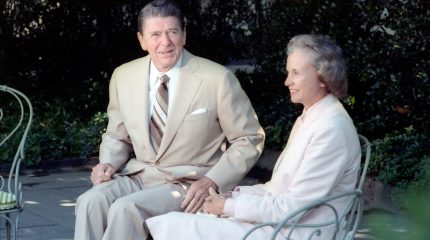
Last Thursday’s ruling in Citizens United v. FEC continues to be the overwhelming focus of Supreme Court coverage and commentary.  Dominating the most recent news cycle are comments made by former Justice Sandra Day O’Connor at Georgetown University Law Center and on CNN’s “The Situation Room.”  The New York Times, NPR, the Washington Post, and ABC News report that Justice O’Connor regards the ruling as a “problem for maintaining an independent judiciary.”  O’Connor remarked on the Court itself: “‘Gosh, I step away for a couple of years and there’s no telling what’s going to happen.’”  Bob Barnes of the Washington Post also takes note of her exchange with Wolf Blitzer about the Court’s decision in Bush v. Gore: “‘Was that the right decision?’ Blitzer asked. ‘I don’t know,’ O’Connor said. ‘It was a hard decision to make.’”

Read the rest of this entry »